
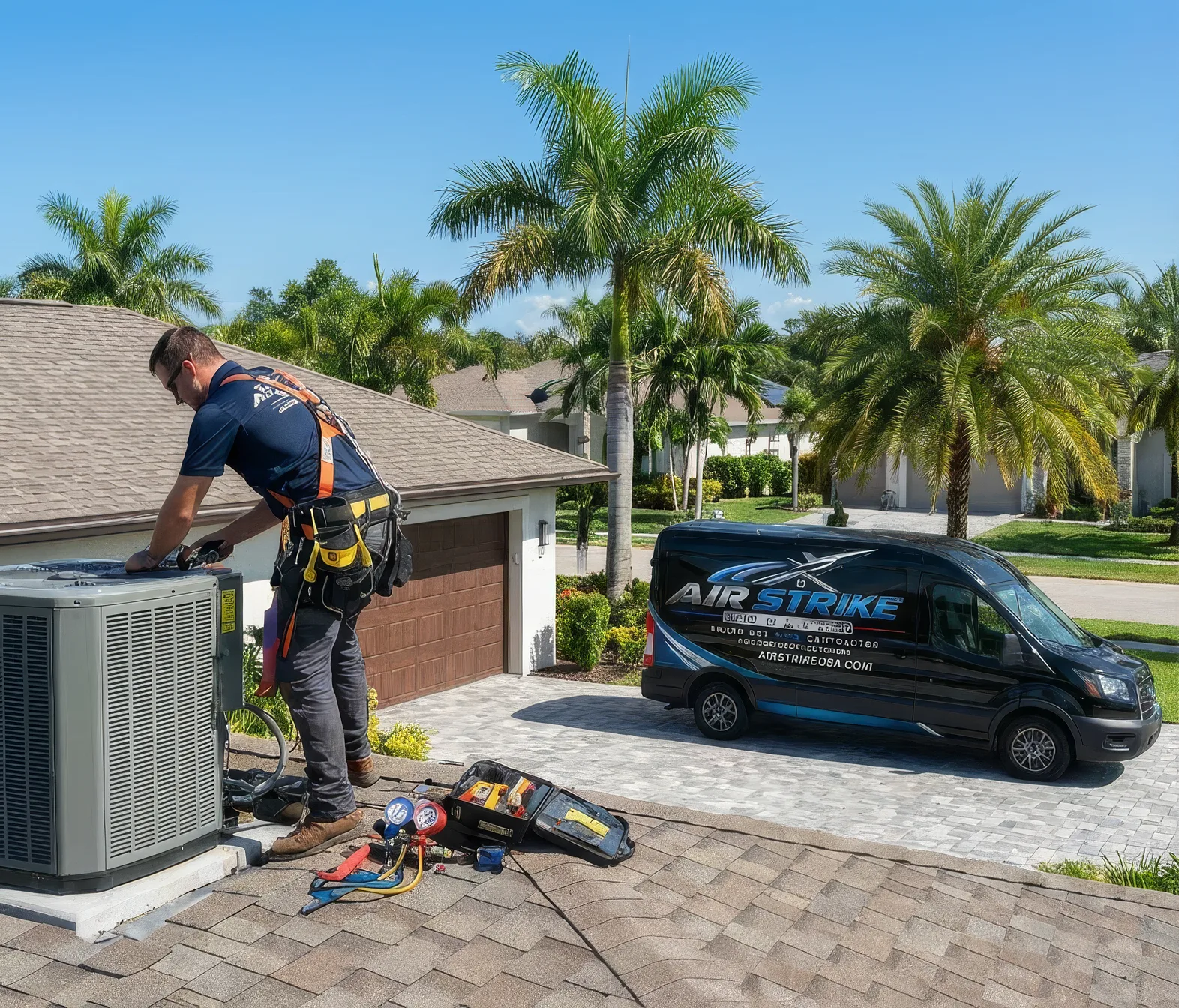
Tampa humidity can amplify musty odors, condensation, and comfort complaints when HVAC airflow or drainage is not right.
Service notes
Key points before you call
Humidity, filter, odor, and airflow review.
Product-specific claims depend on approved manufacturer and product details.
IAQ recommendations tied to visible system conditions.
Start with moisture
High indoor humidity can make a home feel warmer, encourage musty odors, and stress the AC. Airflow, runtime, drain condition, and thermostat settings all matter.
Filtration without overpromising
Better filtration may help capture particles, but filters must match the system. Restrictive filters can reduce airflow if the system is not designed for them.
Indoor air quality Tampa without medical promises
Indoor air quality Tampa and IAQ Tampa conversations should start with practical HVAC conditions: humidity, filtration fit, return-air paths, ventilation, odor sources, drain condition, coil cleanliness, and whether the system can move enough air through the selected filter or accessory. Air quality Tampa improvements should be tied to the installed equipment and homeowner concern, not broad medical claims or generic products.
AC, sinus, allergy, and throat questions
Searches about whether AC causes sinus issues, allergies, wheezing, bronchitis discomfort, or sore throats should be handled carefully. Air Strike does not diagnose health symptoms or promise medical relief. An HVAC visit can still review indoor conditions that affect comfort: humidity level, filter fit, filter bypass, coil and drain cleanliness, return-air dust, ventilation, odor sources, and whether air is blowing directly on sleeping or sitting areas.
Filters and air cleaners without overpromising
EPA guidance says source control and ventilation are the first IAQ steps, while HVAC filters and portable air cleaners can help reduce particles as a supplement. They cannot remove every pollutant from the home. A stronger filter should be matched to the installed system so it does not choke airflow, freeze coils, raise runtime, or create new comfort problems.
Tampa humidity and mold-risk checks
In a humid Tampa home, moisture control matters before any accessory is discussed. High humidity, drain trouble, wet coils, duct leakage, closed rooms, and poor runtime can make odors and dust complaints worse. IAQ service should look for moisture sources, drainage problems, airflow restriction, and filtration fit before suggesting products.
Homeowner questions
FAQ
Can AC cause sinus issues or worsen allergies?
Air Strike cannot diagnose sinus, allergy, wheezing, bronchitis, or sore-throat symptoms. AC can affect indoor conditions that people notice, including humidity, filtration, airflow, dust movement, odors, and whether air blows directly on occupied areas. A service visit can check the HVAC conditions while medical questions belong with a qualified health professional.
Why does my AC smell musty?
Common causes include drain issues, dirty coils, damp ducts, high humidity, or standing water near the indoor unit.
What should indoor air quality services in Tampa check first?
Indoor air quality services Tampa homeowners ask about should start with humidity level, filter fit, return-air paths, visible dust or odors, drain and coil condition, ventilation needs, and whether the blower can handle a proposed filter or IAQ accessory. Product recommendations should come after those conditions are understood.
Is IAQ Tampa service the same as cleaning ducts?
No. IAQ Tampa service can include humidity, filtration, airflow, ventilation, odor, and system-condition review. Air Strike does not treat duct work as the default answer unless that path is verified for the home and actually needed.
Which AC filter is better for allergies?
The better filter is the one that captures the right particles while still fitting the cabinet and allowing proper airflow. Higher-efficiency filters may help reduce particles, but a filter that is too restrictive for the system can create airflow and comfort problems. Air Strike can review filter size, bypass gaps, return capacity, and blower limits before recommending a change.
Can HVAC service help bronchitis, wheezing, or sore throat symptoms?
HVAC service should not be sold as treatment for bronchitis, wheezing, sore throat, blood-pressure concerns, or any medical condition. What it can do is review the indoor air conditions that the system affects: humidity, airflow, filtration, moisture, odors, ventilation, and cleanliness around coils, drains, returns, and filters. Health symptoms should be discussed with a medical professional.