
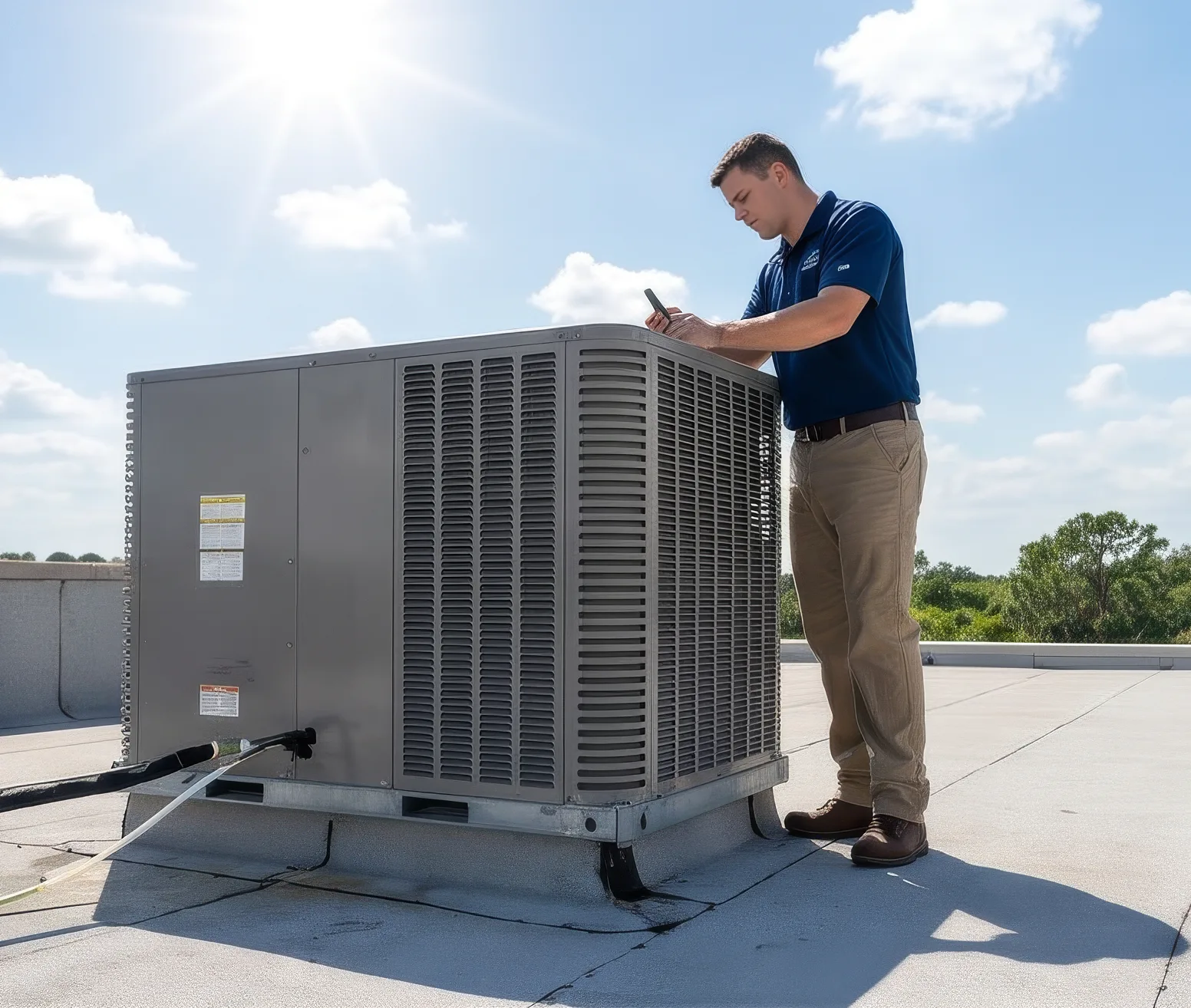
Long cooling seasons in Hillsborough County mean AC systems produce a lot of condensate, especially during humid weather.
Service notes
Key points before you call
AC drain line clogged Tampa troubleshooting for leaks, shutoffs, pans, traps, and repeat backups.
AC drain line cleaning Tampa guidance without harsh chemical or safety-switch bypass advice.
Float-switch, drain pan, trap, slope, and condensate safety review.
Safe next steps for repeat drain backups before water damage spreads.
AC drain line clogged Tampa help
AC drain line clogged Tampa service should confirm where water is showing up, whether a float switch stopped the system, whether the pan is holding water, how the drain line is routed, and whether the backup is tied to algae, sludge, trap problems, slope, coil condition, or filter restriction. The goal is not just to restart the AC; it is to reduce repeat overflow risk.
AC leaking water and drain-line repair in Tampa
An AC leaking water in Tampa often starts with a clogged condensate drain, but the visit should still confirm the pan, float switch, trap, slope, coil condition, filter restriction, and where the drain terminates. Clearing the line without checking the cause can leave the home exposed to another overflow during the next humid runtime cycle.
AC drain line cleaning Tampa precautions
AC drain line cleaning Tampa questions should be handled carefully when water is near finished surfaces or electrical components. Homeowners should avoid harsh chemicals inside the air handler, avoid bypassing float switches, and keep the system off when the pan is full until the drain path is cleared and tested.
How to handle gunk in an AC drain line safely
Gunk in an AC drain line is usually algae, sludge, debris, or buildup that needs the drain path cleared and tested, not a chemical shortcut. Do not pour harsh chemicals into the air handler or keep restarting the system while the pan is full. A safer service visit clears the restriction, flushes the drain path where appropriate, confirms water flow, checks the trap and slope, and verifies the float switch before cooling is left running.
How to know the AC drain line is actually clear
A drain line is not confirmed clear just because the thermostat turns back on. The line should move water to the proper termination, the pan should stay dry during cooling, the float switch should reset without being bypassed, and no new gurgling, dripping, ceiling staining, or water near the air handler should appear. If the air handler is above finished space, the drain should be watched through a cooling cycle instead of assumed fixed.
When an AC drain line clog becomes urgent
Treat a drain backup as urgent when water is near ceilings, flooring, cabinetry, insulation, electrical components, or finished walls. If the thermostat went blank after water appeared, the float switch may have stopped the system to prevent damage. Do not bypass that safety; the drain line and pan need to be cleared, tested, and watched under cooling operation.
How drain-line service should be checked
A useful drain-line repair should clear the blockage, verify water flow, inspect the pan and safety switch, look for algae or sludge buildup, check trap and slope problems, and note whether coil or filter conditions are adding more condensate risk. In Tampa humidity, prevention is part of the repair because the drain works hard for much of the year.
Homeowner questions
FAQ
Is AC drain line cleaning the same as repair?
Not always. Cleaning may clear a blockage, but repair guidance should also check the pan, float switch, trap, slope, drain routing, coil condition, filter restriction, and whether the line backs up repeatedly.
Why did my AC shut off after water backed up?
A float switch may have shut the system down to prevent water damage. The drain issue still needs to be cleared and tested.
Can I keep cooling if the drain pan is full?
No. Running the system can cause more water damage. Turn it off and request service.
How much does it cost to unclog an AC drain line?
Cost depends on access, clog severity, drain routing, float-switch condition, pan condition, and whether water has affected finished surfaces. A technician should inspect and clear the line before recommending any needed repairs.
What should I do if my AC drain line is clogged?
Turn the system off if the pan is full or water is near ceilings, flooring, or walls. Avoid opening electrical panels or using harsh chemicals inside the air handler, and schedule drain-line service.
How do you dissolve gunk in an AC drain line?
Do not rely on harsh chemicals or repeated restarts to dissolve drain-line gunk. Algae, sludge, and debris often need the drain path cleared, flushed where appropriate, and tested. A technician should also check the pan, trap, slope, float switch, coil, and filter conditions so the buildup does not return quickly.
How do I know if I unclogged my AC drain line?
The drain line should carry water to the proper outlet, the pan should stay dry, the float switch should reset without being bypassed, and no new water, gurgling, blank thermostat, or ceiling staining should appear during cooling. If the air handler is above finished surfaces, schedule service rather than assuming the line is clear.
Is AC leaking water in Tampa usually a drain line clog?
A clogged condensate drain is a common cause, but water can also come from a frozen coil thawing, a damaged pan, a poor drain slope, a failed condensate pump where used, or dirty coil and filter conditions. The visit should verify the source instead of assuming every leak is the same repair.
How should an AC drain line be cleaned safely?
Avoid harsh chemicals inside the air handler and do not bypass float switches. A service visit can clear the line, flush the drain path where appropriate, confirm water flow, and test the safety switch so the system is not restarted while overflow risk remains.