
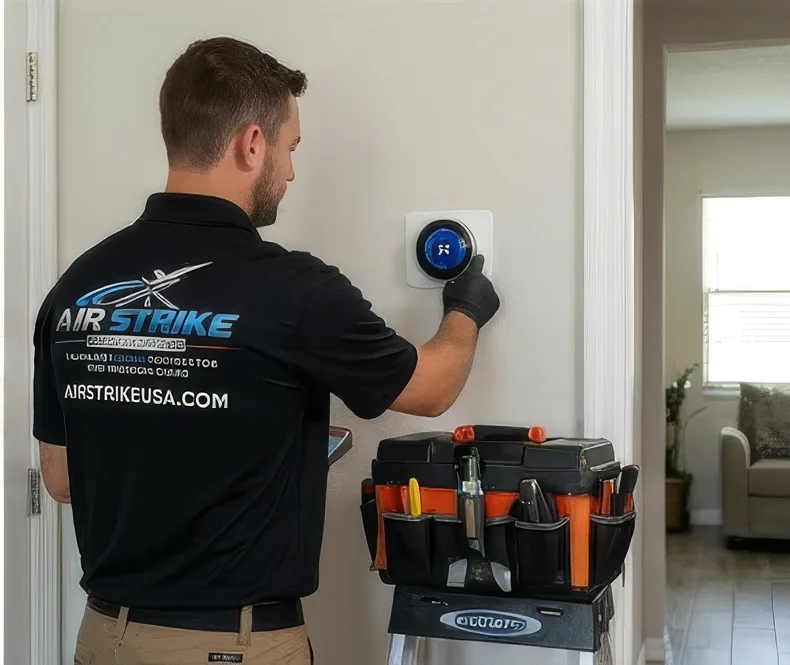
For a Tampa replacement quote, start with Tampa AC replacement service. This guide explains the scope items that make AC installation and new-unit cost conversations easier to compare.
Service notes
Key points before you call
Scope planning for split systems, heat pumps, air handlers, ductless options, thermostats, drains, and airflow.
New AC unit cost-factor review without a flat price, rebate assumption, or generic answer.
Repair-vs-replace discussion based on condition, comfort, and risk.
AC replacement planning and quote comparison
Tampa homeowners comparing AC replacement, AC installation, and new AC unit cost should look beyond the outdoor condenser. The quote should separate equipment size, efficiency, indoor equipment match, duct or return-air findings, condensate drainage, electrical work, permit handling, thermostat needs, installation access, and any comfort corrections needed for humidity or hot rooms.
AC installation Tampa planning guide
For AC installation Tampa, air conditioner installation Tampa, HVAC installation Tampa, or AC replacement Tampa planning, the practical question is what will be installed, what existing equipment must match, what permit path applies, and what comfort problem the new system is supposed to solve. Air Strike keeps that conversation tied to load, airflow, drainage, electrical scope, thermostat setup, humidity control, and written quote details instead of a price-only shortcut.
Air conditioner installation startup checks
A Tampa air conditioner installation should not end when the equipment is set in place. The startup review should check the matched indoor and outdoor equipment, condensate drainage, electrical connections, thermostat control, airflow, refrigerant-side startup procedure, outdoor clearance, access for service, permit documentation, warranty-registration path, and homeowner handoff. Those checks help separate a complete installation scope from a simple equipment swap claim.
Sizing and humidity planning
Oversized equipment can cool the thermostat quickly without removing enough moisture. Undersized or airflow-starved equipment can run constantly and still leave hot rooms. Replacement planning should look at load, duct delivery, return air, and humidity control together.
How to compare the replacement scope before price
A useful quote should identify the indoor and outdoor equipment, thermostat needs, condensate plan, electrical requirements, duct or airflow concerns, permit/licensing details, and any warranties after those facts are verified.
Installation sequence and permit details
Before equipment is selected, the plan should explain how the crew will handle indoor and outdoor equipment access, drain routing, thermostat setup, electrical requirements, permit expectations, startup checks, and any airflow issues that need to be solved during the installation.
Tampa and Hillsborough permit-routing checks
AC replacement and HVAC installation in the Tampa area should verify whether the job falls under the City of Tampa or unincorporated Hillsborough County permitting authority, because the portals and contractor registration steps can differ. A useful replacement conversation should confirm who is handling the mechanical permit, whether the quote mentions the permit explicitly, what equipment and AHRI details need to match the permit record, and whether any drain, electrical, or air-handler changes should appear in the scope before the homeowner compares bids.
Florida SEER2, permit and utility checks
Tampa replacement planning should compare matched equipment with current SEER2/HSPF2 ratings, the AHRI certificate, Hillsborough County mechanical-permit requirements, and any utility incentive rules before a homeowner treats a quote as final. Tampa Electric and Duke Energy Florida programs can change, so eligibility should be confirmed by utility account, equipment certificate, invoice, timing, and whether required energy-check or contractor paperwork applies.
2026 tax credit and rebate eligibility questions
Do not reduce a Tampa replacement budget by a tax credit or rebate until eligibility is confirmed. The current IRS Energy Efficient Home Improvement Credit page describes qualifying property placed in service before December 31, 2025, while ENERGY STAR product lists can still help screen equipment efficiency. For a 2026 installation, homeowners should verify current IRS rules, utility programs, manufacturer paperwork, product certificates, and tax-adviser guidance before treating any credit as available.
Refrigerant transition questions
For residential split-system replacements, the quote should make clear whether the job is a repair to an existing system or a whole new system installation. Existing legacy systems can still be repaired, but new-system replacement planning should also confirm the matched indoor and outdoor equipment, refrigerant design, manufacturer instructions, line-set compatibility, startup procedure, and any permit or labeling details tied to the lower-GWP equipment being proposed.
Replacement help
Choose the right Tampa replacement and installation option
Replacement and installation questions often depend on the city, countywide planning needs, cost factors, permits, humidity control, and repair-versus-replace risk. Choose the closest match before falling back to general navigation.
Tampa and county replacement planning
Start with Tampa or Hillsborough replacement planning when homeowners are comparing installation scope, repair risk, and cost factors.
AC replacement by area
These local options connect replacement and installation planning to nearby Hillsborough communities.
More replacement help
Start here for nearby communities, installation questions, refrigerant guidance, and final scheduling.
Homeowner questions
FAQ
Should I replace the air handler too?
Many replacements involve matching indoor and outdoor equipment, but the right answer depends on condition, compatibility, refrigerant, airflow, and warranty requirements.
What is the $5000 rule for AC?
Homeowners often use a simple rule of thumb: multiply the system age by the repair cost, and if the number is over 5000, replacement deserves a serious look. It is only a budgeting shortcut, not a substitute for equipment condition, comfort, warranty, and installation review.
What is the average cost to replace an AC unit in Florida?
Replacement cost depends on equipment size, efficiency, air handler match, duct condition, electrical work, permitting, access, and comfort goals. Air Strike Cooling avoids publishing invented prices until the actual home and system are reviewed.
Where should Tampa homeowners start if they need a replacement quote?
Start with Tampa AC replacement service when you are ready to request a local quote. This planning guide explains the scope items Air Strike Cooling reviews first: indoor and outdoor equipment match, airflow, drain routing, electrical needs, permit expectations, thermostat setup, and new AC unit cost factors before a project-specific recommendation is made.
Do I need a permit to replace my AC in Florida?
For most residential AC replacements, homeowners should expect a mechanical permit rather than an off-the-books equipment swap. The quote should say who is handling the permit, whether the home falls under the City of Tampa or Hillsborough County route, and how the equipment match, drain plan, thermostat setup, and startup details will line up with the permit record before work begins.
What should a Tampa AC installation quote show before I compare price?
A useful Tampa AC installation quote should identify the indoor and outdoor equipment, matched-system certificate, permit responsibility, drain and electrical scope, thermostat requirements, airflow or duct findings, startup expectations, warranty registration path, and any humidity-control concerns. Without that detail, price comparisons can hide important differences in installation quality.
Is AC installation the same as AC replacement in Tampa?
Homeowners often use the terms together. AC installation can mean a planned new system, a replacement after failure, or installation of matched indoor and outdoor equipment. The important comparison points are permit path, equipment match, airflow, drain routing, electrical scope, thermostat setup, startup procedure, and written project details.
What should happen after a new air conditioner is installed?
After installation, the system should be started and checked for airflow, drainage, thermostat control, outdoor-unit operation, refrigerant-side startup requirements, permit documentation, and homeowner handoff. Warranty registration and final project terms should be confirmed from the actual equipment and paperwork.
What is the tax credit for HVAC replacement in Florida in 2026?
Florida homeowners should verify current federal, utility, and manufacturer incentives before counting a credit in the replacement budget. The current IRS Energy Efficient Home Improvement Credit page describes qualifying property placed in service before December 31, 2025, so a 2026 installation should not be assumed to qualify without current IRS, ENERGY STAR, product-certificate, and tax-adviser review.
Will a new Tampa AC use a different refrigerant than my old system?
It can. Existing systems can still be repaired, but a whole new residential split-system replacement should be quoted as the manufacturer-designed matched system for the refrigerant it was built to use. Homeowners should ask whether the proposal is a repair or a full replacement, whether the indoor and outdoor equipment are matched, and whether any line-set, coil, or startup requirements change with the new equipment.