
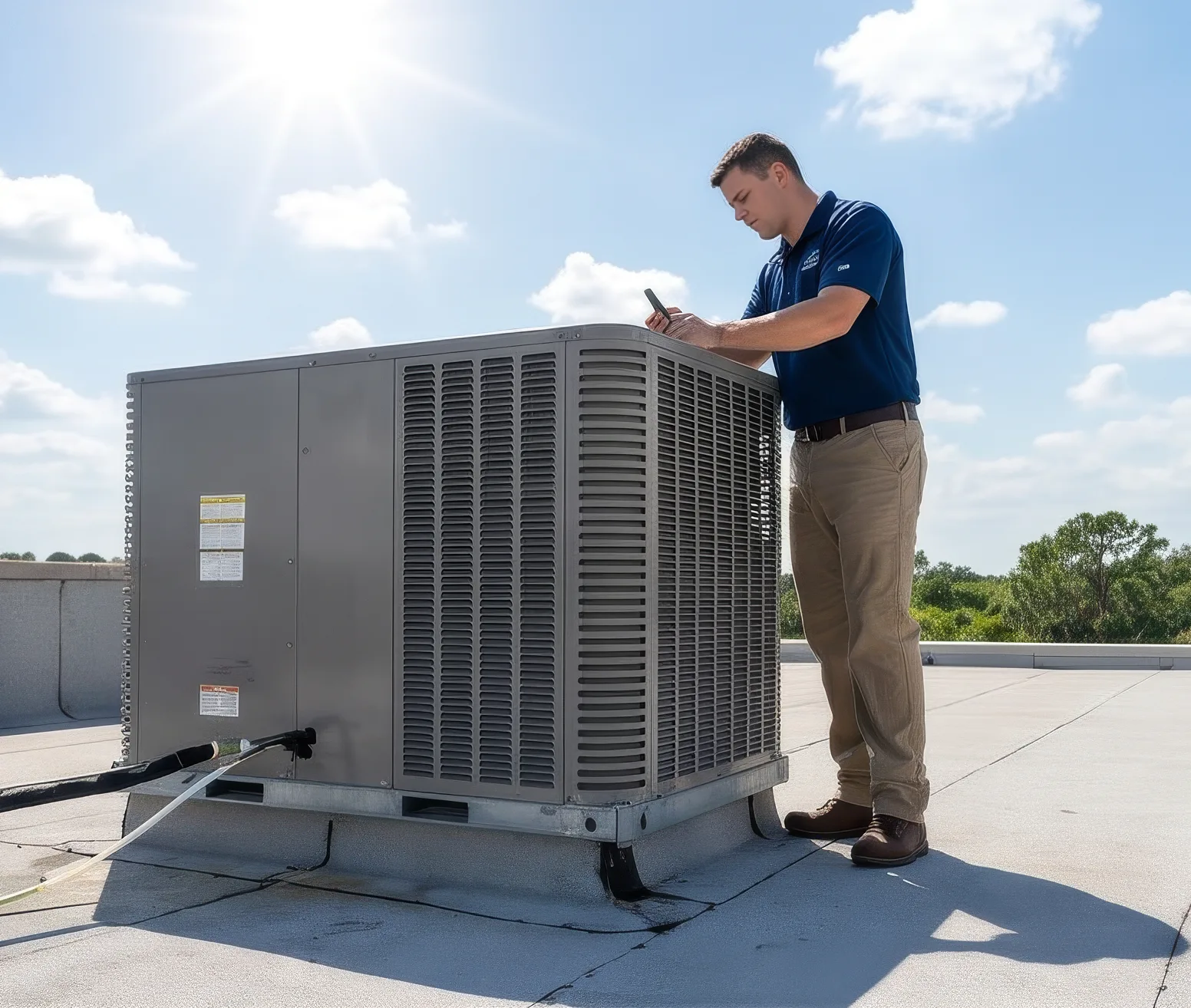
Tampa cooling systems remove heavy moisture, so drain performance is central to reliability.
Service notes
Key points before you call
Turn the system off if water is active.
Protect floors and ceilings.
Do not bypass a float switch.
AC leaking water in Tampa
When an AC is leaking water in Tampa or the AC drain line looks clogged, treat active water as a property-protection issue first. Turn cooling off when water threatens ceilings, floors, walls, cabinetry, insulation, or electrical components, then describe the leak location, thermostat behavior, float switch, drain pan, and whether ice appeared before the leak.
Likely causes of AC water leaks
An AC leaking water in Tampa usually traces back to condensate that cannot leave the air handler correctly. Common causes include clogged drain lines, dirty coils, cracked or rusted pans, failed condensate pumps where used, poor drain slope, a frozen coil melting faster than the drain can carry water, or a float switch shutting the system down after water backs up.
What to do when water is active
Turn cooling off if water is actively threatening ceilings, floors, walls, or electrical components. Protect the area with towels or a pan if it is safe, but do not bypass a float switch or keep resetting the system. Note where the water appears, whether the thermostat went blank, and whether ice was present before the leak started.
How to prevent repeat drain backups
Repeat water leaks usually need more than a quick drain clearing. A good visit should check the drain line, pan condition, float switch, coil cleanliness, filter restriction, trap or slope problems, and whether the air handler location makes overflow especially risky. Regular maintenance can reduce repeat backups, but the underlying drain path still has to be correct.
Drain-line gunk and chemical shortcuts
If the AC drain line has algae, sludge, or gunk, avoid harsh chemical shortcuts unless a qualified technician has confirmed the method is safe for that system. The safer goal is to clear the restriction, confirm the pan and float switch are working, and make sure water can leave the home without leaking into finished surfaces. A chemical smell, active water, or electrical area nearby is a reason to stop and call instead of experimenting.
Signs the drain line still is not clear
The drain may still be restricted if the thermostat blanks again, the pan refills, water returns near the air handler, gurgling continues, or the same ceiling, closet, garage, or flooring area gets wet after cooling restarts. A cleared line should move water to the drain termination while the pan stays dry and the float switch remains untripped during normal cooling.
Water location changes urgency
Water in a garage pan is different from water dripping through a ceiling, into a closet, near electrical components, or across finished flooring. Tell Air Strike exactly where the water is, whether the thermostat went blank, whether the system shut itself off, and whether ice appeared first. The leak location helps decide whether the visit is routine drain service or an urgent water-risk call.
Emergency AC help
Water leak AC repair in Tampa
Call when water appears near the air handler, ceiling, closet, garage, or drain pan. If the home is heating up, water is active, ice is visible, breakers trip, or electrical symptoms appear, call or choose urgent repair service instead of forcing the system to keep running.
When to call a pro
Call when water appears near the air handler, ceiling, closet, garage, or drain pan.
Homeowner questions
FAQ
Why did the thermostat go blank after a leak?
A blank thermostat after a leak often means a condensate float switch or safety device shut the system down because water backed up. It can also involve low-voltage power, a blown fuse, transformer issue, or wiring problem. Do not bypass the safety switch; it is there to stop water damage while the drain problem is diagnosed.
Is an AC leak an emergency?
An AC leak is urgent when water threatens ceilings, floors, walls, cabinetry, insulation, or electrical components. A small amount of water in a secondary pan may be less severe, but active leaking should still be addressed quickly in Tampa humidity. Turn cooling off if damage is possible and call with the leak location and symptoms.
How much is it to unclog an AC drain line in Tampa?
Drain-line clearing cost depends on access, clog severity, air-handler location, whether water reached finished surfaces, whether the pan or float switch needs service, and whether coil, trap, slope, or pump issues are also involved. Air Strike Cooling avoids made-up flat prices until the drain path and safety devices are checked, because a simple blockage and a leak above finished space can require different work.
Can a clogged AC drain line cause ceiling damage?
Yes. If the air handler is above finished space, a backed-up drain can overflow into ceilings, walls, cabinets, or flooring before the homeowner sees much water. Float switches and secondary pans reduce risk, but they are not a repair. Active leaking should be treated as urgent, and cooling should be turned off when water could damage the home.
Should I pour chemicals into an AC drain line?
Avoid harsh chemical shortcuts unless a qualified technician specifically recommends a safe method for that system. Chemicals can damage parts, create fumes, or fail to clear the real restriction. A drain-line visit should identify the blockage, pan condition, float switch, trap or slope issue, drain termination, and whether coil or filter problems are adding water load.
How do you dissolve gunk in an AC drain line?
Do not pour harsh chemicals into the air handler to chase gunk. Algae and sludge often need the line cleared and flushed safely, then the pan, trap, slope, float switch, coil, and filter conditions checked so the same buildup does not quickly return.
How do I know if I unclogged my AC drain line?
The drain should move water to the proper outlet, the pan should stay dry, the thermostat should not blank again from the float switch, and no new water should appear near ceilings, floors, closets, or the air handler after cooling runs. If water can damage the home, call for service instead of relying on a quick restart.
Should I turn off the AC if water is leaking?
Turn cooling off when water could damage ceilings, floors, walls, cabinets, insulation, or electrical components. Leaving the system running can add more condensate or melt ice into an already weak drain path. If water is active, share the leak location, thermostat behavior, and whether the air handler is in an attic, closet, garage, or ceiling-adjacent space.