
Ventilation brings outdoor air indoors, and in Tampa that air is humid. NOAA's 1991-2020 normals for Tampa International Airport show 3,928.2 cooling degree days against 433.5 heating degree days in an average year, so the weather an added ventilator has to handle is mostly warm and wet.
Service notes
Key points before you call
- Residential Lennox models listed here: 2.
- Official Lennox public PDFs linked for these options: 4.
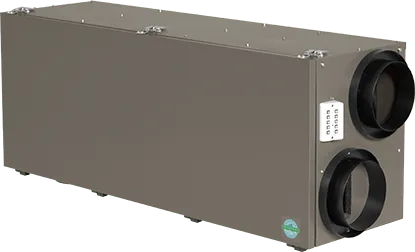
- The ERV listing says it transfers moisture and heat from incoming fresh air to the outgoing airstream and is ideal for warmer climates with mild winters.
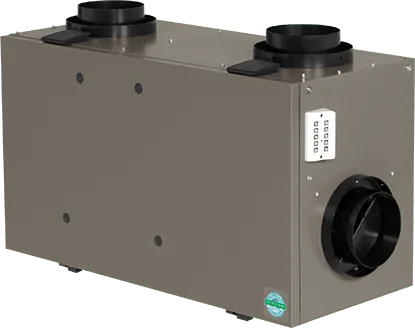
- The HRV listing says it is ideal for homes in cooler regions and lists an electronically controlled damper for defrost.
- Coverage: Lennox lists ventilation capacity of up to 3,800 square feet for the ERV and up to 6,000 square feet for the HRV.
- Energy recovery is listed as up to 75 percent on the ERV and up to 82 percent on the HRV; both list washable MERV-4 filtration and no ozone emissions.
- Lennox suggests considering ventilation for tightly built homes, homes with an attached garage, and homes insulated with spray foam.
Which Lennox ventilation products fit Tampa homes?
Ask first whether the house needs mechanical ventilation at all. Lennox points to three situations: tight construction that holds stale air, an attached garage where car fumes can seep into the home, and spray-foam insulation that keeps indoor air recirculating. If none applies, the answer may be a bath-fan or filter fix and not a new ventilator. If one does, the next question is how the incoming air is conditioned, which is where the ERV and HRV differ.
How to compare these models
Compare the two on climate fit, coverage and recovery. The ERV is described for warmer, humid climates with mild winters and covers up to 3,800 square feet at up to 75 percent energy recovery. The HRV is described for cooler regions, covers up to 6,000 square feet at up to 82 percent, and adds a defrost damper for cold weather. Both are listed as compatible with all HVAC system types and both accept timers and wall controls as optional accessories.
Lennox model details and PDF downloads
This category includes 4 Lennox PDF downloads across 2 models. Each model links the PDFs Lennox makes available. The ERV and HRV each link a Healthy Climate ventilator brochure and an Indoor Air Quality Solutions brochure from Lennox.
Air Strike service that matches Lennox ventilation products
The closest Air Strike service is indoor air quality. It is where a ventilation request is checked against the existing air handler, the duct layout and the humidity load the house already carries.
Questions to answer before a quote
Before a ventilator is priced, settle the airflow target, where the outdoor air intake and exhaust will terminate, how the unit ties into the duct system, which control runs it, and what filter service it needs. The EPA notes that ASHRAE Standard 62.2-2016 recommends 0.35 air changes per hour but not less than 15 cubic feet per minute per person for residential buildings, which gives the conversation a number to start from.
Cost, permit, rebate, and warranty questions for Lennox ventilation products
Use the list for budget screening only, since an ERV or HRV is a duct and control job and not just a box. Lennox shows a price-guide symbol rather than a dollar amount. Duct work, intake and exhaust penetrations, wiring, controls and permit handling all sit in the written scope, where rebate eligibility, warranty registration and permit responsibility are also confirmed.
Next Air Strike steps for Lennox ventilation products
Start with Air Strike's indoor air quality service to review the house, then Tampa AC replacement or Hillsborough County HVAC replacement if the ventilator is part of a larger equipment change. Those services connect a ventilation choice to duct work, humidity load and the schedule before the quote is approved.
Questions to bring to the quote
Ask for the model, the airflow rate and how it was chosen, the intake and exhaust locations, the duct connections, the control and timer, the filter type and cleaning interval, the electrical supply, and who handles the permit. Lennox lists 120V for both units.
When to use an individual model
Open a single model when you know which ventilator you are comparing. The ERV listing shows up to 75 percent energy recovery and a 120V, 1.4 amp electrical rating. The HRV listing shows up to 82 percent recovery and amperage that varies by model, along with a Power Saver constant-torque motor on some units.
Repair-vs-replace questions before choosing Lennox ventilation products
A repair-vs-replace question only exists if a ventilator is already installed. If a house already has a ventilator that stopped, the first questions are the filter, the damper and the control, which are repair items. If the house has stuffy rooms and no ventilator, the question is whether to add one. Ask the written scope to say which of the two is being solved.
What to confirm before choosing Lennox ventilation products
Before choosing a ventilator, confirm the model, coverage, duct route, availability, pricing, rebates and warranty terms with Air Strike Cooling, and check Lennox's listing for the latest figures.
Lennox equipment options
Compare the models in this category.
Compare residential Lennox options for this equipment type, then open individual models with official Lennox PDF links when those downloads are publicly available.
Indoor air quality / Ventilation
Confirm whether ventilation can be added without creating a humidity control problem before selecting a model or starting work.
Models and downloads
Lennox ventilation products
Open a model to see its Lennox product link, downloadable PDFs when available, no-PDF note when applicable, and a quote form.
Homeowner questions
FAQ
Can Air Strike quote a Lennox ventilator in Tampa?
Air Strike Cooling can help Tampa and Hillsborough County homeowners compare the Lennox ERV and HRV and confirm the right service or estimate. Availability, installation scope, warranty details, rebates and final pricing must be confirmed directly.
Which Lennox ventilator is meant for warm, humid climates?
Lennox describes the ERV as ideal for warmer climates with mild winters and says it transfers moisture and heat from incoming fresh air to the outgoing airstream. It describes the HRV as ideal for cooler regions.
Does adding ventilation add humidity?
Outdoor air in Tampa carries moisture, which is why Lennox's ERV is built to transfer moisture between the airstreams. How much load it adds depends on the unit, the airflow and the existing air conditioner, so the scope should state the airflow.
How much ventilation does a home need?
The EPA says ASHRAE Standard 62.2-2016 recommends 0.35 air changes per hour but not less than 15 cubic feet per minute per person for residential buildings. Treat that as a starting reference, not a design for your house.
How large a house does each ventilator cover?
Lennox lists ventilation capacity of up to 3,800 square feet for the ERV and up to 6,000 square feet for the HRV. Airflow need depends on occupants and layout as well as area.
Which situations does Lennox say call for ventilation?
Lennox lists tight construction that makes air stale, attached garages that can pass contaminants such as car fumes into the home, and spray-foam insulation that keeps indoor air recirculating.
Where are the Lennox PDFs for the ERV and HRV?
Each model links a Healthy Climate ventilator brochure and an Indoor Air Quality Solutions brochure. Open the individual model for the links.
What does a ventilator install cost, and who handles the permit?
A model list is not an installed price. The written scope should list the unit, duct and intake work, controls and wiring, and permit responsibility is confirmed in that scope before work starts.