
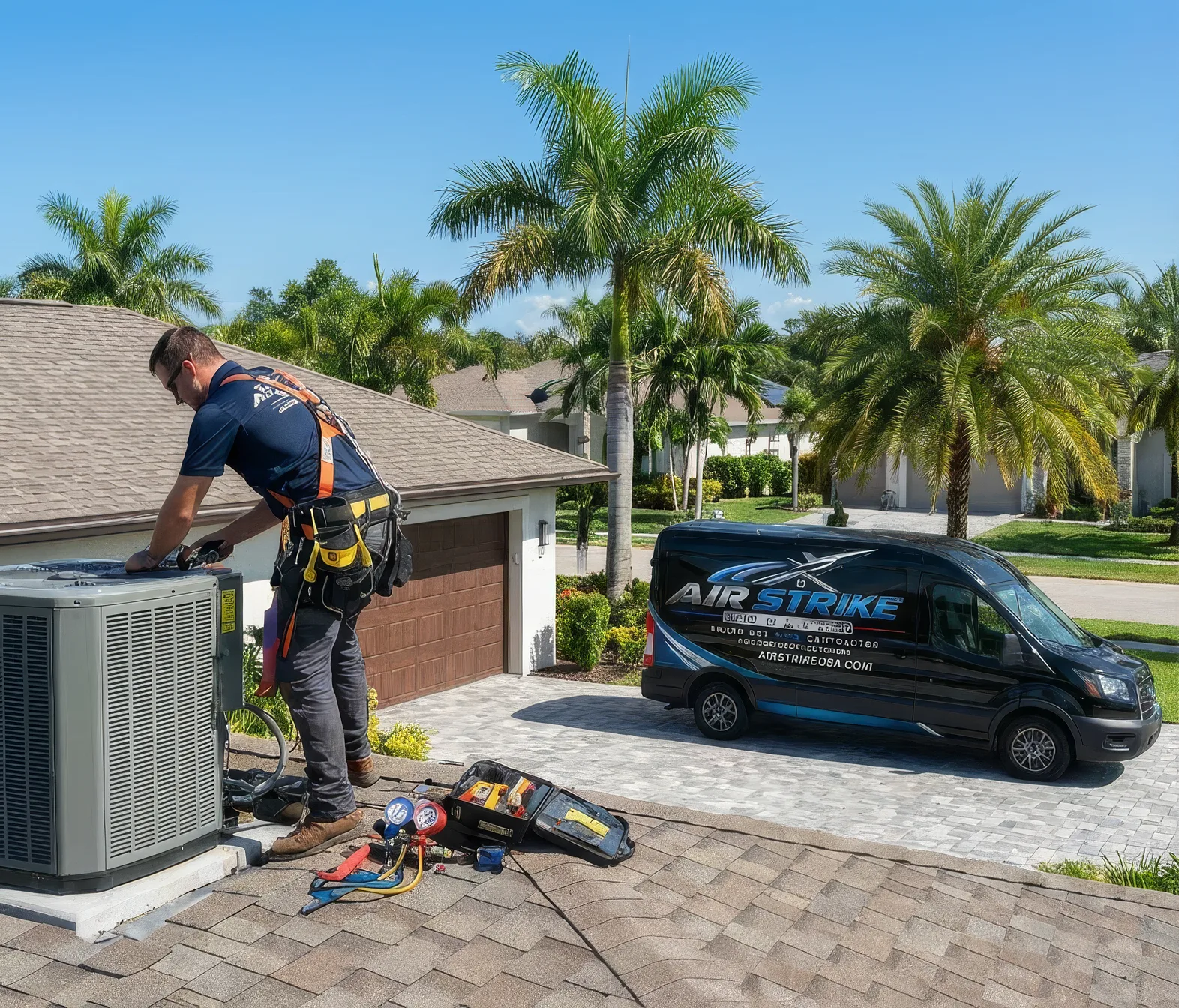
In Hillsborough County, long cooling cycles, humidity, clogged drains, and attic heat can make small AC issues show up fast.
Service notes
Key points before you call
Cooling diagnostics for warm air, weak airflow, electrical faults, and short cycling.
HVAC repair and service triage for cooling, airflow, drain, thermostat, and air-handler symptoms.
AC service help for no-cool calls, high bills, frozen coils, and drain shutoffs.
Drain-line, thermostat, air handler, and condenser troubleshooting.
Repair-first guidance with replacement discussed only when it is practical.
What the repair visit should answer
A good AC repair visit should identify the failed component, explain whether the issue is isolated or system-wide, and show what happens if the repair is delayed. Tampa homes often need both mechanical checks and airflow checks because humidity can hide comfort problems until late in the day.
AC service options for Tampa symptoms
AC repair, air conditioning repair, and AC service in Tampa should route the homeowner by symptom: no-cool and heat-sensitive homes need urgent triage, water or ice symptoms need the system protected before more runtime, and repeat repairs should trigger a repair-versus-replacement conversation without pressure.
HVAC repair and HVAC service in Tampa
HVAC repair in Tampa often means the same repair conversation as AC repair during cooling season, but the diagnostic should still look at the complete installed system: thermostat controls, air handler, blower, drain safety, duct airflow, outdoor condenser, electrical components, and whether heat-pump or indoor-air-quality settings are affecting comfort. HVAC service should separate urgent cooling failure from maintenance, airflow, thermostat, drain-line, and replacement-planning issues.
Air conditioning repair Tampa guide
For air conditioning repair Tampa, the practical first step starts with the symptom, not a general contractor list. Confirm whether the home is not cooling, blowing warm air, leaking, freezing, short cycling, making new noises, or refusing to start; then move the request to normal AC repair, emergency AC repair, AC drain-line help, maintenance, or replacement planning based on safety, access, system age, and what the technician finds.
What the 3 minute rule means before restarting AC
The 3 minute rule means waiting at least 3 to 5 minutes before turning cooling back on after the thermostat is changed, power blinks, or the system shuts off. That pause gives pressure inside the system time to settle and helps reduce hard starts. Do not keep restarting the AC if the breaker trips, ice is visible, water is present, burning smells appear, or the outdoor unit will not run normally.
What the 20 degree rule means for AC cooling
The 20 degree rule is a homeowner screening shortcut, not a repair diagnosis. People often use it two ways: supply air from the vents may be roughly 15 to 20 degrees cooler than return air, or a home may struggle to hold an indoor setpoint more than about 20 degrees below outdoor temperature during extreme heat. Tampa humidity, airflow, attic ducts, insulation, dirty coils, filter restriction, and system sizing can all change that result, so a weak temperature split should start an airflow and equipment check instead of a guess.
AC repair cost factors before diagnosis
AC repair cost in Tampa cannot be reduced to one public number before diagnosis. The practical factors are call timing, access, failed part, whether the issue is indoor or outdoor equipment, water or electrical risk, drain safety, refrigerant-side findings, thermostat behavior, and whether the visit uncovers a maintenance issue or a larger repair-vs-replacement decision. Use the cost guide for public planning ranges, then wait for the written diagnosis before treating any project-specific price as reliable.
Repair or replace
Replacement becomes a serious discussion when repair costs stack up, the system is near the end of its expected life, comfort is uneven, or efficiency has fallen sharply. A technician should review the actual equipment, installation, and comfort needs before you make that decision.
AC repair options
Match the Tampa AC symptom to the right Air Strike service
The best starting point is not always the same for every symptom. Start with urgent no-cool triage, water or ice safety steps, or repair-versus-replacement planning based on what the system is doing right now.
Urgent no-cool calls
Start here when the house is heating up, the system is blowing warm air, or the situation may need 24/7 emergency triage.
Water, ice, or shutdowns
Start here for freezing coils, leaking water, drain shutoffs, and no-start symptoms that need safer first steps before more runtime.
Repair, maintenance, or replacement
Start with these guides when the question is whether another repair makes sense, whether maintenance can prevent repeats, or whether replacement planning should start.
Homeowner questions
FAQ
What AC problems should not wait?
Warm air during extreme heat, electrical burning smells, water near ceilings or flooring, repeated breaker trips, and ice on the system should be handled quickly.
Can a clogged drain line stop cooling?
Yes. Many systems use a float switch that shuts the system off when the condensate drain backs up, which helps prevent water damage.
What is the most common AC repair?
In Tampa no-cool calls, common repairs often involve capacitors, contactors, drain safeties, thermostat issues, blower problems, dirty coils, or airflow restrictions. A technician still needs to diagnose the exact cause before recommending the repair.
What is the most common part to fail on an AC unit?
Common failure points can include capacitors, contactors, fan motors, blower components, drain safeties, thermostat controls, and dirty or restricted airflow conditions. The exact failed part has to be diagnosed on the installed system before Air Strike treats it as a repair recommendation.
Why is my AC not cooling all of a sudden?
Sudden cooling loss can come from a tripped breaker, clogged filter, failed outdoor-unit part, frozen coil, blocked drain safety, thermostat issue, or refrigerant-side problem. Turn the system off if you see ice, water, or electrical symptoms.
How much does AC repair cost in Tampa?
AC repair cost depends on diagnosis, timing, access, failed parts, indoor versus outdoor equipment, drain or electrical risk, and whether the finding points to repair, maintenance, or replacement planning. Air Strike gives pricing after the system and symptom are reviewed.
Which Air Strike service should I choose for AC repair in Tampa?
Choose Tampa AC repair when the home is in Tampa and the problem is a normal no-cool, warm-air, airflow, drain, thermostat, or outdoor-unit symptom. Choose emergency AC repair when the home is unsafe to wait in, water threatens finished areas, breakers trip repeatedly, electrical smells appear, or someone heat-sensitive cannot wait through a normal repair queue.
Is HVAC repair different from AC repair in Tampa?
For Tampa cooling calls, HVAC repair and AC repair often start with the same symptom: the home is not cooling, airflow is weak, the system is leaking, freezing, short cycling, or refusing to start. A complete HVAC service visit should still check the broader system, including thermostat controls, air handler, blower, drain safety, duct airflow, outdoor equipment, and heat-pump configuration when applicable.
What should I check before calling for AC repair?
Check thermostat mode and set point, the breaker, the air filter, whether the outdoor unit is running, whether the drain pan or float switch has tripped, and whether you see ice or water. Stop the system and call if there is burning smell, sparking, water near finished surfaces, or ice on the coil or refrigerant lines.
What is the 3 minute rule for AC?
Wait at least 3 to 5 minutes before turning cooling back on after a thermostat change, power blink, or system shutdown. If the breaker trips again, ice or water appears, the outdoor unit does not run, or you notice electrical smells, stop restarting the system and schedule AC repair.
What is the 20 degree rule for AC repair calls?
The 20 degree rule is only a rough screening clue. If vent air is not about 15 to 20 degrees cooler than return air, or the home cannot keep up during peak Tampa heat, the cause may be airflow restriction, duct leakage, dirty coils, refrigerant-side trouble, thermostat placement, insulation, or equipment sizing. A technician should compare temperature split with airflow, humidity, drains, and equipment condition before naming a repair.