
6 min read · Last updated June 4, 2026
Tampa AC Tune-Up Checklist
A Tampa AC tune-up should check airflow, coils, condensate drains, float switches, thermostat operation, electrical components, and outdoor-unit condition before peak heat.
Reviewed for customer education by Air Strike Cooling, operating under Florida Certified Air Conditioning Contractor license CAC1822636, held by Hale's Air Conditioning Service, Inc. (Hales AC).
Quick answer
A Tampa AC tune-up should check airflow, coils, condensate drains, float switches, thermostat operation, electrical components, and outdoor-unit condition before peak heat.
A Tampa tune-up should focus on the problems most likely to become no-cool calls during long cooling cycles: airflow restriction, clogged drains, dirty coils, weak electrical parts, thermostat issues, and outdoor-unit debris.
What a Tampa AC tune-up should check
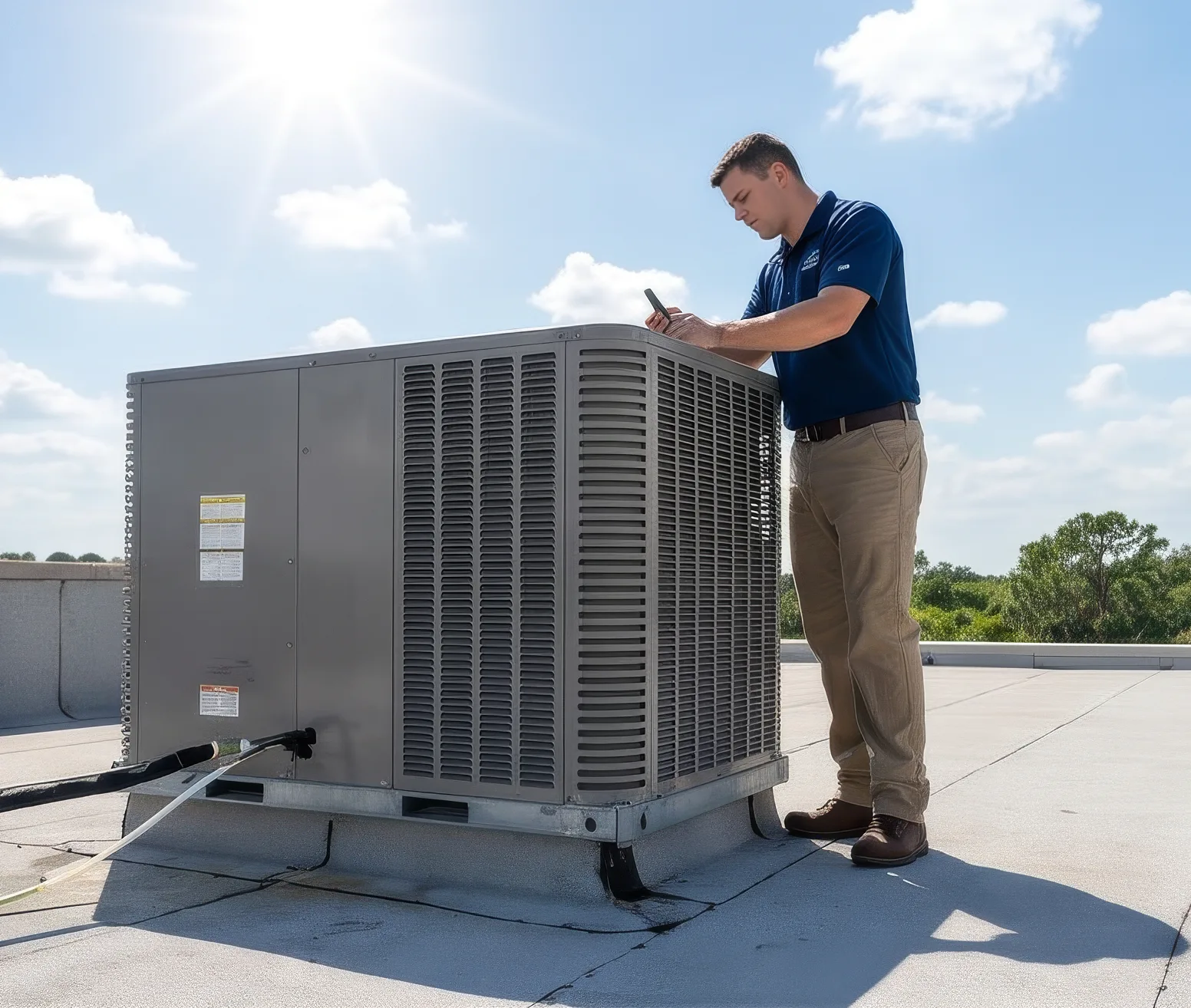
A Tampa AC tune-up should check the air filter, return-air path, supply airflow, evaporator coil condition, outdoor condenser coil condition, condensate drain, float switch, thermostat operation, outdoor-unit clearance, electrical component condition, and any symptoms the homeowner has noticed. For AC tune up Tampa or air conditioner tune up Tampa planning, expect a practical checklist that catches preventable cooling, water, airflow, and electrical issues before heavy runtime exposes them.
Drain, coil, and airflow items matter most in humidity
Long cooling seasons create heavy condensate and long blower runtimes, so drain-line flow, pan condition, coil cleanliness, and airflow restriction should be treated as core tune-up items rather than extras. If a system has a history of blank thermostats, water in the pan, frozen coils, musty smells, or hot rooms, the tune-up should document those symptoms and recommend diagnosis when maintenance alone is not enough.
Is an AC tune-up worth it before Tampa summer?
A pre-summer AC tune-up is worth scheduling when you want drains, coils, airflow, thermostat behavior, outdoor-unit condition, and electrical warning signs checked before the system runs its longest cycles. It can lower the chance of preventable water, airflow, and comfort surprises, but it is still maintenance rather than a promise that no part will fail later.
AC tune-up cost factors to ask about
Ask whether the tune-up price depends on system count, membership status, equipment access, visit timing, and repair findings. A useful quote should separate the maintenance checklist from any repair work found during the visit, so you know what is included and what requires approval before Air Strike does extra work.
When the tune-up should trigger a repair discussion
A tune-up should turn into a repair discussion when the visit finds failed electrical components, repeated breaker trips, active leaks, unsafe wiring symptoms, failing motors, refrigerant-side warning signs, frozen-coil behavior, or comfort problems that need diagnosis. The homeowner should understand what is preventive maintenance, what is an immediate repair need, and what can be monitored.
How to prepare for maintenance
Before the visit, write down recent no-cool moments, warm-air complaints, thermostat messages, filter changes, hot rooms, water near the air handler, unusual sounds, and whether the power bill changed. Clear access to the indoor and outdoor equipment if safe. Good notes help the technician separate routine tune-up work from AC repair, drain-line service, or airflow diagnosis.
What homeowners can check between visits
Between professional visits, homeowners can check the filter, keep the outdoor unit clear, watch for thermostat messages, note water or ice, listen for changed sounds, and write down warm-air or hot-room patterns. Do not open electrical panels, handle refrigerant lines, bypass float switches, or keep resetting breakers when the system is showing a fault.
What should be documented after the tune-up
The homeowner should leave with more than a verbal thumbs-up. Useful documentation includes filter size and condition, drain and float-switch observations, coil and outdoor-unit notes, thermostat settings, electrical concerns, airflow comments, and any repair or watch items. That record helps compare future symptoms against the last maintenance visit and makes the next no-cool, water, warm-air, or high-bill call less vague.
Tune-ups should connect to the number of systems
A home with two systems, a main house plus addition, or separate upstairs and downstairs equipment should not be treated like one simple unit. Each system can have different filter sizes, drain routing, runtime, thermostat behavior, and comfort complaints. Maintenance should identify which system serves which rooms, especially when a homeowner is also comparing Right Away Priority plan levels or trying to understand why one area fails before another.
Maintenance does not replace safe repair diagnosis
If the visit finds a failed part, active water, ice, repeated breaker trips, burning smell, or an outdoor unit that will not start, the work should shift from tune-up language to repair diagnosis. That distinction protects the homeowner from thinking a maintenance checklist can safely solve an electrical, refrigerant-side, water-safety, or major airflow problem without a repair recommendation.
Homeowner questions
FAQ
What does an AC tune up in Tampa include?
A Tampa AC tune-up should check airflow, filter condition, indoor and outdoor coils, condensate drain, float switch, thermostat operation, outdoor-unit clearance, electrical components, and visible comfort concerns. It should also document water, ice, warm-air, short-cycling, hot-room, or no-cool symptoms so the homeowner knows whether maintenance is enough.
How often should Tampa homeowners schedule an AC tune up?
Many Tampa homeowners schedule AC maintenance before peak cooling demand, and some choose twice-yearly visits because Florida cooling seasons are long. The right cadence depends on system age, runtime, drain history, pets, filtration, humidity complaints, and whether the home has had recent no-cool, warm-air, water, or airflow issues.
Can an AC tune up prevent emergency repair?
A tune-up can reduce preventable issues by catching dirty coils, clogged drains, weak electrical components, airflow restrictions, thermostat problems, and outdoor-unit debris before they become urgent. It cannot prevent every part failure, so Air Strike avoids promising that maintenance will eliminate emergency repairs.
Is it worth getting an AC tune up in Tampa?
Yes, an AC tune up is worth considering before Tampa's longest cooling cycles when you want drains, coils, airflow, thermostat behavior, and electrical warning signs checked. It can reduce preventable water, airflow, and comfort issues, but it should not be treated as a promise that no part will fail later.
How much should I pay for an AC tune up in Tampa?
The answer depends on visit scope, system count, equipment access, membership status, timing, and whether the technician finds a repair issue. Ask what is included in the tune-up, what would be quoted separately, and whether a Right Away Priority plan changes the scheduling or service terms.
What should I tell the technician before a tune up?
Share recent no-cool moments, warm-air complaints, hot rooms, thermostat messages, filter changes, drain backups, water near the air handler, unusual sounds, and power-bill changes. Those notes help separate routine maintenance from repair diagnosis and make the tune-up more useful than a generic checklist.
Does each AC system need its own maintenance record?
Yes. Homes with multiple systems should track filter size, drain history, thermostat behavior, airflow complaints, and repair notes by system. That matters for Right Away Priority planning, future diagnostics, and deciding whether one unit needs maintenance, repair, airflow correction, or replacement before the other.