
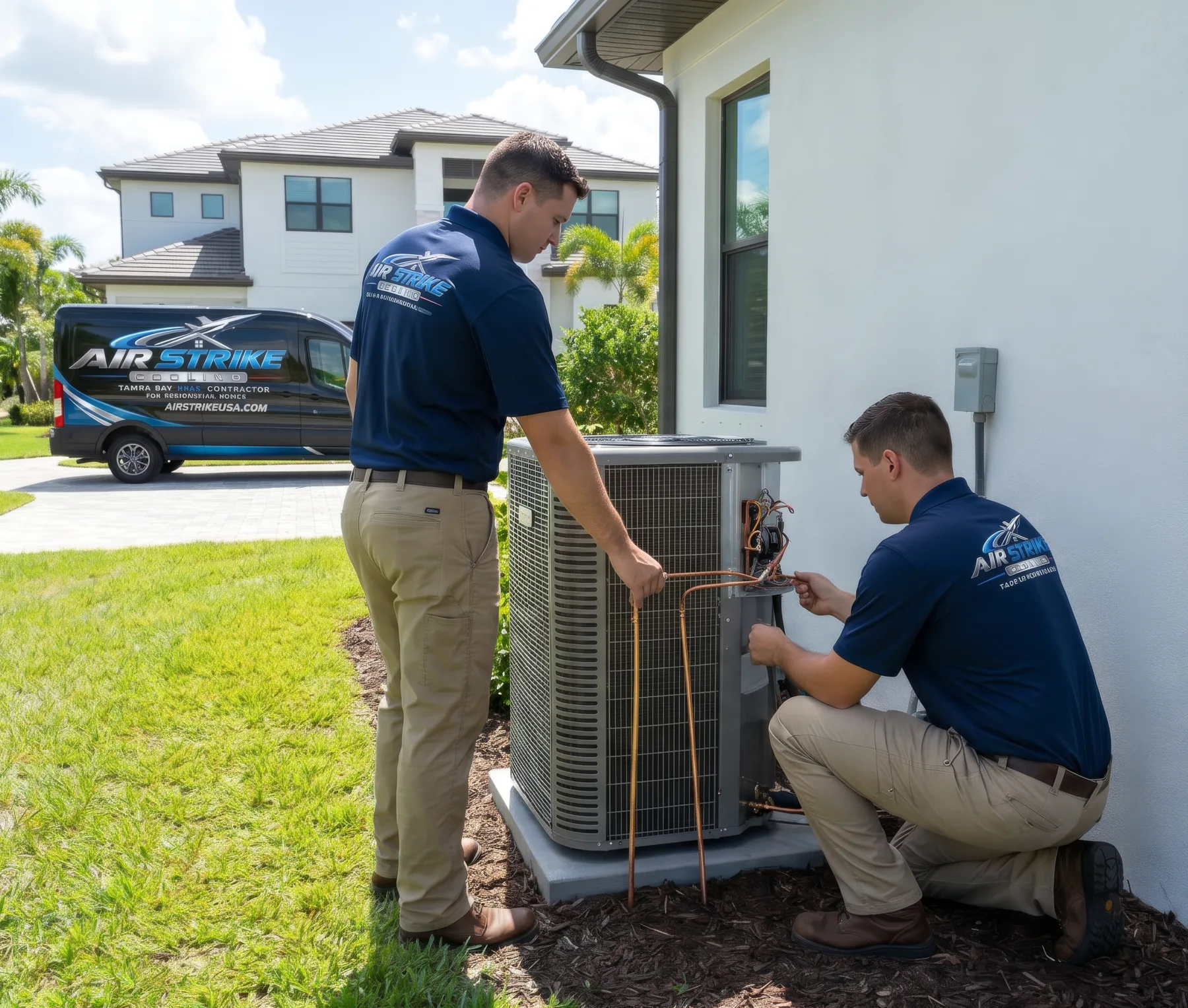
In Tampa humidity, warm-air calls often pair with rising indoor moisture and longer runtimes.
Service notes
Key points before you call
Confirm cool mode.
Check whether the outdoor unit runs.
Look for ice on refrigerant lines or the indoor coil area.
AC blowing warm air in Tampa
When an AC is blowing warm air in Tampa, first separate thermostat mode, indoor airflow, outdoor-unit operation, ice, water, and breaker symptoms. If the Tampa home keeps warming, the outdoor unit will not run, or vulnerable people are inside, request urgent AC repair instead of repeatedly lowering the thermostat.
Do not only lower the thermostat
Dropping the setpoint will not fix a system that cannot remove heat. It may make freezing worse if airflow is restricted.
What diagnosis should include
A technician should check controls, outdoor-unit operation, airflow, coil condition, temperatures, and safety devices.
Warm air triage before a Tampa repair call
For AC blowing warm air in Tampa, note whether the outdoor unit is running, whether the indoor blower is strong or weak, whether the thermostat is in cool mode, whether the refrigerant line is icy, and whether the vent air is warm from every room or only certain rooms. Those clues help separate thermostat settings, airflow restriction, outdoor-unit faults, frozen coils, duct delivery issues, and refrigerant-side problems.
When warm air should trigger urgent repair
Warm air becomes urgent when the home is heating up quickly, the outdoor unit will not run in severe heat, vulnerable people are inside, visible ice or water appears, the system repeatedly trips a breaker, or there is a burning smell, buzzing, or sparking. Those signs should move to emergency AC repair instead of repeated thermostat adjustments.
Warm-air details that change the diagnosis
Before service, note whether every room is warm or only one area, whether the outdoor unit runs, whether the indoor blower feels strong, whether the thermostat is set to cool, and whether ice or water is visible. Whole-home warm air often points to cooling equipment or controls, while one warm area can involve airflow, duct delivery, doors, returns, or room load.
Emergency AC help
Warm air AC repair in Tampa
Call when the thermostat is set correctly and vents still blow warm or room-temperature air. If the home is heating up, water is active, ice is visible, breakers trip, or electrical symptoms appear, call or choose urgent repair service instead of forcing the system to keep running.
When to call a pro
Call when the thermostat is set correctly and vents still blow warm or room-temperature air.
Homeowner questions
FAQ
Is warm air always low refrigerant?
No. Low refrigerant is one possibility, but warm air can also come from a thermostat set incorrectly, a non-running outdoor unit, weak airflow, a frozen coil, failed electrical controls, or a blower problem. Because several failures feel the same at the vents, diagnosis should compare indoor airflow, outdoor-unit operation, temperature split, safeties, and visible coil or drain symptoms.
Should I turn the AC off?
Turn cooling off if you see ice, hear electrical buzzing, smell burning, notice water near finished surfaces, or the system repeatedly trips a breaker. If the AC is simply blowing room-temperature air with no unsafe symptoms, note what the indoor and outdoor units are doing, then schedule diagnosis. Avoid forcing an extreme thermostat setting because it can make freezing or electrical stress worse.
Why is my AC suddenly blowing warm air?
Sudden warm air can happen when the thermostat is in the wrong mode, the outdoor unit stops, airflow drops, the coil freezes, a drain or float switch interrupts cooling, an electrical component fails, or refrigerant-side readings move outside normal operation. Note whether the outdoor fan runs, whether the indoor blower is strong, and whether ice, water, buzzing, or breaker trips are present before calling.
Why does the indoor fan run when the air is warm?
The indoor blower can keep moving air even when the outdoor unit is not removing heat. That can happen with thermostat fan settings, a failed outdoor component, control trouble, drain safety interruption, weak airflow, or a frozen coil. The useful clue is whether the outdoor unit runs at the same time and whether the vent air is weak, warm, or room temperature.
Can weak airflow make AC vents feel warm?
Yes. Weak airflow can keep enough heat from crossing the coil, which may make supply air feel warmer and can even contribute to freezing. Dirty filters, blocked returns, blower trouble, duct restrictions, or closed registers can all reduce delivered cooling. A warm-air diagnosis should compare airflow, outdoor-unit operation, coil condition, safeties, and duct delivery before assuming one part failed.
Why is my AC running but not cooling the house?
The indoor fan can run while the cooling side is not removing enough heat. Possible causes include thermostat setup, outdoor-unit failure, weak airflow, frozen coil behavior, drain safety interruption, dirty coils, duct delivery problems, or refrigerant-side faults. Note whether the outdoor unit runs and whether every room feels warm before scheduling the visit.