
4 min read · Last updated May 29, 2026
Warm Air from AC Vents
Warm air can come from thermostat, outdoor-unit, airflow, coil, electrical, or refrigerant-side problems.
Reviewed for customer education by Air Strike Cooling, operating under Florida Certified Air Conditioning Contractor license CAC1822636, held by Hale's Air Conditioning Service, Inc. (Hales AC).
Quick answer
Warm air can come from thermostat, outdoor-unit, airflow, coil, electrical, or refrigerant-side problems.
Tampa and Hillsborough County homes run cooling equipment for long seasons, so useful HVAC guidance should connect temperature, humidity, airflow, drainage, and safety.
First checks for warm air
Confirm the thermostat is set to cool, the fan is not set to circulate warm air continuously, the filter is not severely restricted, and the outdoor unit is running while the indoor blower runs. If the outdoor unit is silent, note whether you hear a hum, click, or fan attempt. If the refrigerant line or coil area is iced, turn cooling off and let the system thaw before diagnosis.
Why warm air is not one single repair
Warm air can come from a thermostat setting, non-running condenser, failed capacitor, failed contactor, weak airflow, frozen coil, control-board issue, blower trouble, or refrigerant-side problem. A useful diagnosis should not jump straight to refrigerant; it should verify controls, airflow, electrical components, safeties, outdoor operation, and temperature readings before recommending repair.
When warm air becomes urgent
Treat warm air as urgent when the home is heating up quickly, someone is heat-sensitive, water appears near finished surfaces, ice is visible, electrical symptoms appear, or the outdoor unit will not run during severe heat. In those cases, calling is faster and safer than continuing to lower the thermostat.
Outdoor-unit clues matter
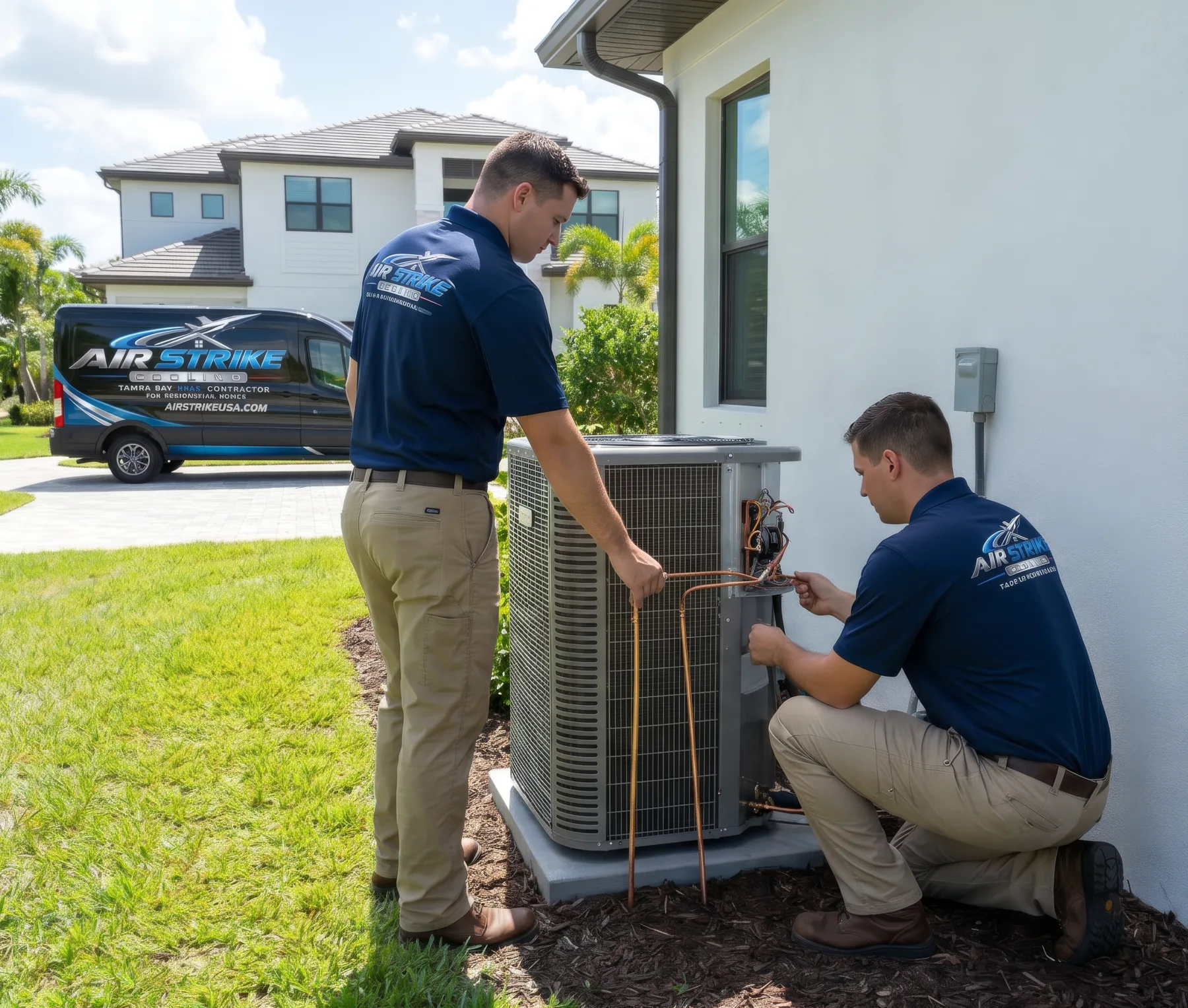
Warm air from the vents often starts outside. If the indoor blower runs but the outdoor unit is silent, humming, clicking, or spinning without cooling, the issue may involve controls or electrical components rather than the thermostat setting alone. Homeowners should not remove panels or touch capacitors, but they can safely observe whether the outdoor fan is moving, whether the unit sounds different, and whether the breaker trips again after one safe reset.
Airflow and ice can make warm air confusing
A frozen coil can eventually produce weak or warm air even though the original cause is airflow, coil, blower, or refrigerant-side trouble. A severely clogged filter or blocked return can create similar symptoms. If ice appears on the refrigerant line or air-handler area, cooling should be turned off so thawing does not create a larger water problem. Diagnosis should happen after the system can be evaluated safely.
Outdoor-unit clues help separate causes
Warm air with an indoor blower running often means the outdoor unit needs closer attention. A silent condenser can point toward controls, safeties, power, or component failure; a fan spinning without cooling can point somewhere else; humming or repeated clicking changes the urgency. Homeowners can safely observe sound, fan movement, cabinet damage, and breaker behavior from a distance, then share those clues without touching capacitors, wiring, or refrigerant lines.
Airflow problems can feel like warm air
Restricted airflow can make the air at the register feel warmer because not enough indoor heat is crossing the coil. Dirty filters, blocked returns, closed or obstructed registers, weak blower operation, duct leakage, or an iced coil can all reduce delivered cooling. That is why a warm-air visit should include airflow and return-air checks, not only outdoor-unit parts. Fixing a capacitor will not solve a room that is starved for air.
When warm air points to emergency service
Warm air is more urgent when indoor temperature climbs quickly, the home has infants, older adults, medical heat sensitivity, water appears around the air handler, the breaker trips, electrical smells appear, or the outdoor unit hums without starting. In those cases, continued runtime can increase comfort risk or equipment stress. Calling first is safer than lowering the thermostat repeatedly and hoping the air turns colder.
Homeowner questions
FAQ
Why is my AC blowing warm air from the vents?
Warm air can come from thermostat settings, a non-running outdoor unit, failed capacitor or contactor, weak airflow, frozen coil, control issues, blower trouble, or refrigerant-side problems. Diagnosis should compare airflow, outdoor operation, safeties, electrical components, and temperature readings.
Should I turn off an AC that is blowing warm air?
Turn cooling off if you see ice, water, breaker trips, burning smells, buzzing, or other unsafe symptoms. If the system is only blowing room-temperature air, note what the indoor and outdoor units are doing and schedule diagnosis instead of forcing a very low setpoint.
Why is my AC blowing warm air but still running?
The indoor blower can keep running even when the outdoor unit, controls, safeties, airflow, coil condition, or refrigerant side is not cooling correctly. That is why vents can feel warm while the thermostat still calls for cooling. Note whether the outdoor fan runs, whether you hear humming or clicking, and whether ice or water is present, then schedule diagnosis.
Should I turn the thermostat lower when vents feel warm?
Usually no. If the system is already blowing warm or room-temperature air, a lower setpoint will not fix a failed outdoor component, frozen coil, clogged drain safety, airflow restriction, or electrical issue. It can make the system run longer and stress equipment. Keep the setting reasonable, stop if warning signs appear, and have the cause checked.