
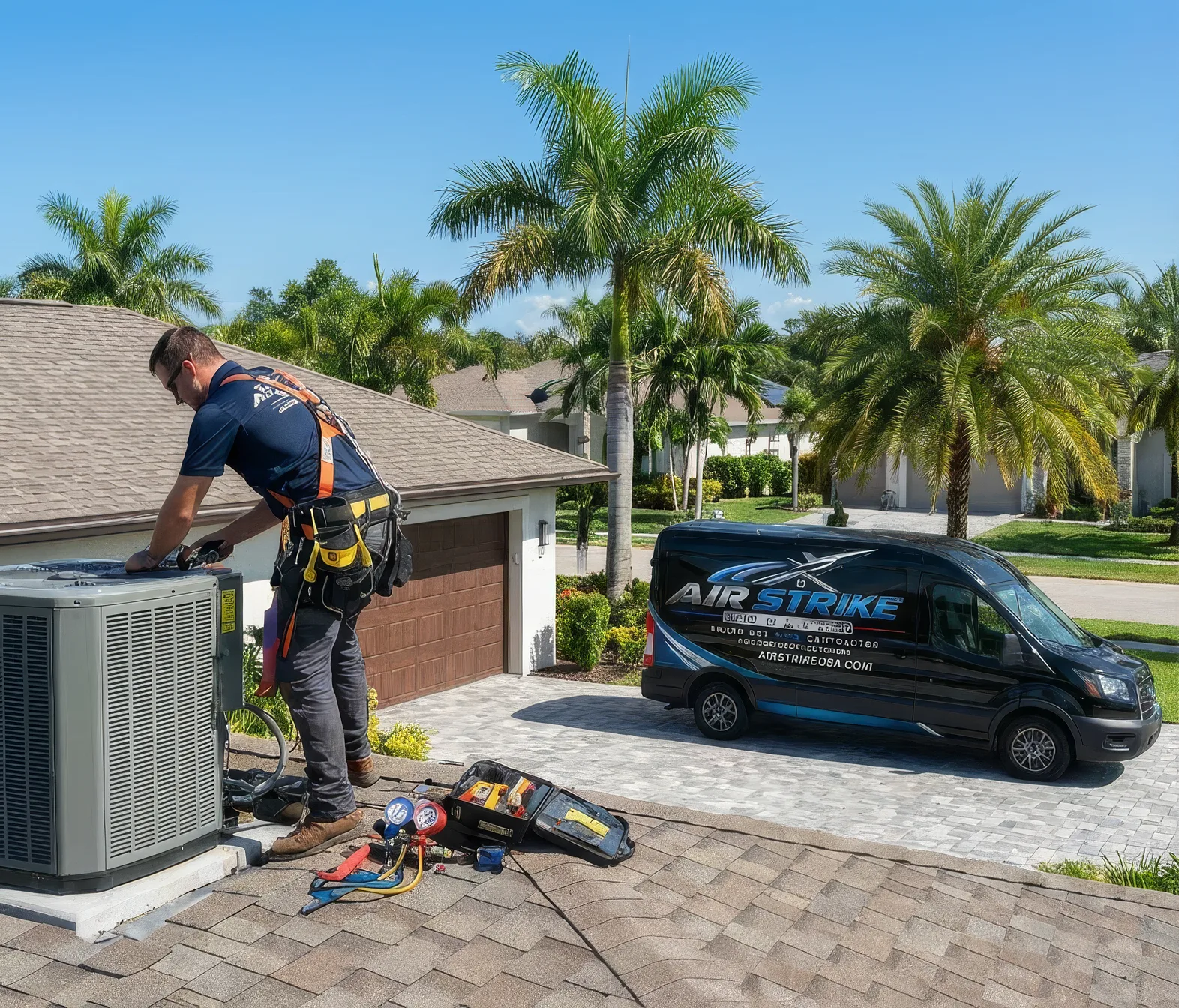
Outdoor units around Tampa can collect storm debris, leaves, and corrosion stress, while attic ducts can amplify airflow noise.
Service notes
Key points before you call
Record the sound if safe.
Note whether it comes from indoor or outdoor equipment.
Stop the system for grinding or burning smells.
What different AC sounds can mean
Buzzing can point to electrical components, contactors, capacitors, or a struggling motor. Rattling can come from loose panels, debris, or fan issues. Squealing or grinding can involve bearings or moving parts. Whistling and popping often point to duct pressure, return-air limits, filter restriction, or metal expansion in ductwork.
When to shut the system off
Turn the system off when the noise is harsh, metallic, grinding, paired with a burning smell, paired with breaker trips, or coming from a fan blade that may be hitting something. If cooling is already poor, forcing the system to continue can turn a small warning sound into a failed motor, damaged fan, or electrical repair.
Tampa noise factors to check
Outdoor units in Tampa can collect leaves, storm debris, loose fasteners, corrosion stress, and vibration from pads or brackets. Indoor air handlers and attic duct runs can amplify blower noise, whistling returns, or pressure changes. A useful visit should identify whether the sound is mechanical, electrical, airflow-related, or duct-related before replacing parts.
Details that help diagnosis
Record the sound only if it is safe, then note whether it happens at startup, shutdown, during the full cycle, or only when the outdoor unit runs. Also note whether it comes from the thermostat area, indoor air handler, return grille, ductwork, or outdoor unit. Timing and location are often the fastest clues.
Emergency AC help
Noise AC repair in Tampa
Call when noise is new, loud, metallic, electrical, or paired with poor cooling. If the home is heating up, water is active, ice is visible, breakers trip, or electrical symptoms appear, call or choose urgent repair service instead of forcing the system to keep running.
When to call a pro
Call when noise is new, loud, metallic, electrical, or paired with poor cooling.
Homeowner questions
FAQ
Is AC buzzing dangerous?
Buzzing can be minor or serious depending on where it starts and what else is happening. Electrical buzzing with a burning smell, breaker trips, poor cooling, or a non-starting outdoor unit should be checked quickly. Avoid opening electrical panels, and turn the system off if the sound seems unsafe.
Can ducts make AC noise?
Yes. Ducts can whistle, pop, boom, or rattle when return air is restricted, filters are dirty, ducts are undersized, dampers are closed, or pressure changes quickly. Duct noise can also reveal airflow problems that make rooms hot, raise bills, or make equipment work harder than intended.
What AC noises should not wait?
Grinding, scraping, loud metal contact, repeated clicking with no start, electrical buzzing, or noise paired with a burning smell should not wait. Shut the system off if it is safe, avoid repeated restarts, and call with the sound location, when it happens, and whether cooling has changed.
What should I record before an AC noise visit?
If it is safe, record a short clip and note whether the sound happens at startup, shutdown, during the full cycle, or only when the outdoor unit runs. Also note whether cooling changed, whether the breaker tripped, and whether the sound comes from the return grille, air handler, ductwork, thermostat area, or outdoor unit. Those details narrow the diagnostic checks.
Can storm debris make the outdoor AC unit noisy?
Yes. Leaves, branches, loose panels, shifted pads, bent fan guards, or debris near the condenser can create rattling, scraping, or vibration after storms. Homeowners can clear loose debris around the unit when it is safe, but should not remove panels or reach into the cabinet. Harsh metallic sounds or fan contact should be checked before the system keeps running.