
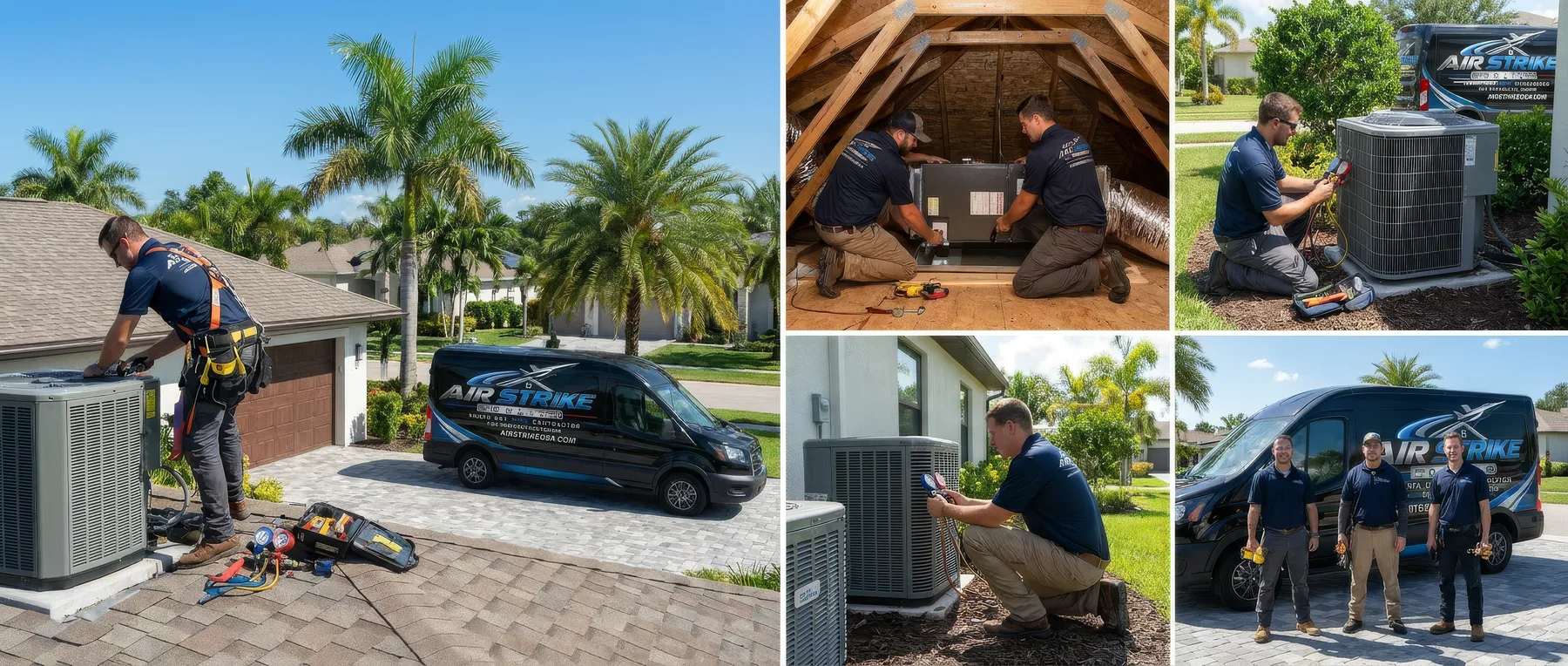
West-facing rooms, bonus spaces, additions, and attic duct runs are common Tampa comfort trouble spots.
Service notes
Key points before you call
Compare room temperatures.
Check return-air paths.
Avoid randomly closing vents.
Why one room stays hot
One hot room can come from weak supply airflow, limited return-air path, closed doors, duct leakage, crushed flex duct, attic heat, solar gain, insulation gaps, dirty filters, blower issues, or a room addition that was never balanced. In Tampa homes, west-facing glass, bonus rooms, and long attic duct runs often make the symptom worse in the afternoon.
Airflow diagnosis
A useful diagnosis should look at supply ducts, return paths, filters, blower performance, duct leakage, static pressure, room heat gain, register placement, and whether the room changes when doors are open. The goal is to determine whether the equipment is failing, the duct system is limiting delivery, or the room load is different from the rest of the home.
Why closing vents can backfire
Closing vents in other rooms can raise duct pressure, reduce total airflow, increase leakage, create noise, and make the system less stable. It may move a little air temporarily, but it does not fix undersized returns, duct restrictions, air-handler problems, or heat gain. Persistent hot rooms need measurement instead of guesswork.
Possible fixes
Solutions may include duct adjustments, return-air improvements, balancing, sealing accessible duct leakage, insulation improvements, blower or air-handler repair, thermostat-placement review, or a ductless option for isolated rooms. A bigger AC should not be the default answer until airflow and room load are understood.
Emergency AC help
Uneven comfort AC repair in Tampa
Call when one room stays hot, vents feel weak, or closing vents has not helped. If the home is heating up, water is active, ice is visible, breakers trip, or electrical symptoms appear, call or choose urgent repair service instead of forcing the system to keep running.
When to call a pro
Call when one room stays hot, vents feel weak, or closing vents has not helped.
Homeowner questions
FAQ
Will a bigger AC fix hot rooms?
Not necessarily. A bigger AC can make humidity control worse if the real problem is duct delivery, return air, insulation, solar gain, or room layout. Before changing equipment size, the airflow path, room load, duct condition, and current system performance should be checked so the fix matches the cause.
Can a mini split help one hot room?
A ductless mini split can help when one room has a different load or cannot be served well by the existing duct system. It should not be the first assumption. The room should be evaluated for return air, duct leakage, insulation, solar gain, and whether the central system is performing correctly.
Why are vents weak in one part of the house?
Weak vents can come from duct restrictions, crushed flex duct, disconnected duct sections, undersized branches, closed dampers, dirty filters, blower issues, or return-air limits. If weak airflow is paired with high bills, humidity, or long runtimes, the home may be losing cooling before it reaches the room.
Can return air problems create hot rooms?
Yes. If a room cannot return enough air to the system, supply air may not move through it well, especially when doors are closed. Undersized returns, blocked grilles, long duct runs, leakage, or pressure imbalance can leave rooms hot and humid. Return-air paths should be checked before assuming the outdoor unit is too small.
Should I close vents to push air into a hot room?
Usually no. Closing vents can raise duct pressure, increase leakage, create noise, reduce total airflow, and make humidity control worse. It may move air temporarily, but it does not fix poor return air, crushed ducts, insulation gaps, or solar heat gain. Persistent hot rooms need airflow and room-load diagnosis instead of guesswork.