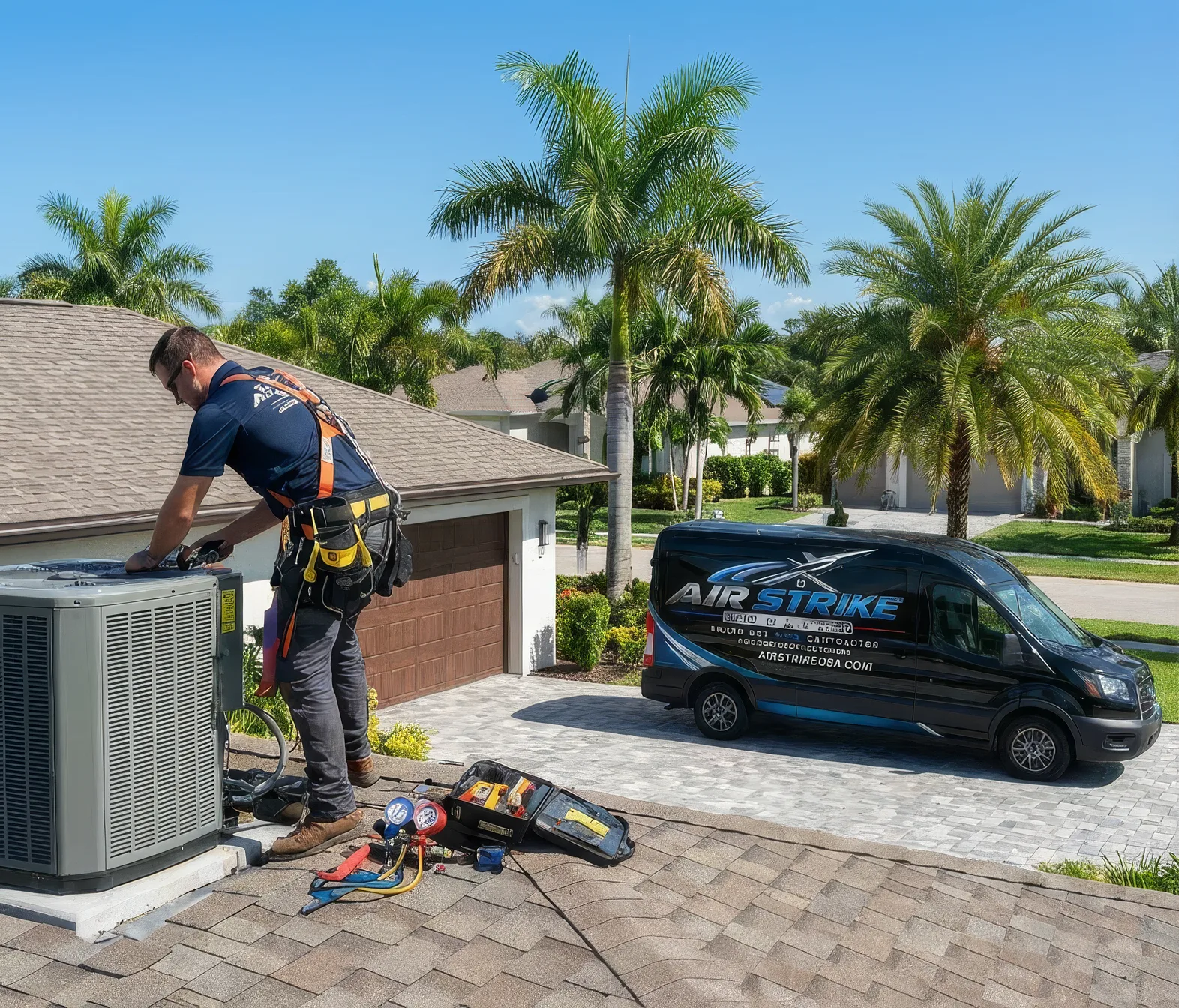
Long cooling seasons in Hillsborough County make small efficiency losses add up over months.
Service notes
Key points before you call
Compare runtime, not just bill total.
Check filters and thermostat schedule.
Inspect hot rooms and duct symptoms.
Compare runtime before blaming the bill
A higher electric bill can come from hotter weather, rate changes, longer runtimes, thermostat settings, or more people at home. The HVAC clue is runtime. If the AC runs longer than usual, cycles constantly, struggles in the afternoon, or does not control humidity, the bill increase may be tied to airflow, maintenance, ducts, controls, or equipment condition.
Comfort clues matter
High bills paired with hot rooms, weak airflow, warm supply air, short cycling, high indoor humidity, noisy ducts, or a thermostat that never seems satisfied often point to system or duct problems rather than weather alone. Those symptoms help prioritize filter restriction, blower performance, duct leakage, thermostat setup, refrigerant-side issues, or aging equipment.
Replacement is not the first assumption
A high bill does not automatically mean the AC should be replaced. Maintenance, coil cleaning, filter correction, thermostat programming, airflow balancing, duct repair, drain repair, or a targeted component repair may be appropriate first. Replacement planning becomes more relevant when bills rise alongside age, repeat repairs, poor humidity control, and declining comfort.
What a bill-related visit should check
A useful diagnostic should compare filter condition, thermostat schedule, supply and return airflow, coil cleanliness, outdoor-unit condition, temperature split, duct leakage clues, humidity performance, drain behavior, and system age. The goal is to identify whether the home is paying for lost cooling, excessive runtime, control problems, or equipment that is no longer performing efficiently.
Emergency AC help
High utility bill AC repair in Tampa
Call when bills jump without a clear weather or rate explanation, especially with longer runtimes or comfort issues. If the home is heating up, water is active, ice is visible, breakers trip, or electrical symptoms appear, call or choose urgent repair service instead of forcing the system to keep running.
When to call a pro
Call when bills jump without a clear weather or rate explanation, especially with longer runtimes or comfort issues.
Homeowner questions
FAQ
Can a dirty filter raise my electric bill?
Yes. A dirty filter can restrict airflow, reduce heat transfer, increase runtime, and make the system work harder to reach the same setpoint. It can also contribute to freezing or comfort complaints. If a new filter does not improve airflow and runtime, the system should be checked for deeper restrictions or equipment issues.
Can ducts waste cooling?
Yes. Leaky, crushed, disconnected, or poorly insulated ducts can lose conditioned air into attics, walls, or other unconditioned spaces. In Tampa homes, attic duct losses can be expensive because the system runs during long humid seasons. Hot rooms, dusty vents, and weak airflow can be clues.
When should a high AC bill lead to replacement planning?
Replacement planning is worth discussing when the system is older, repairs repeat, comfort has declined, humidity control is poor, major components are failing, or energy use keeps rising after maintenance and airflow issues are addressed. The decision should compare repair cost, system condition, duct condition, comfort goals, and expected remaining life.
Should a high electric bill always mean AC replacement?
No. A high bill should start with a system and home review, not an automatic replacement recommendation. Runtime, filter restriction, duct leakage, thermostat schedule, attic heat, coil condition, airflow, drain behavior, humidity, and recent weather can all change energy use. Replacement planning becomes more relevant when higher bills repeat alongside age, repair history, and declining comfort.
Can thermostat settings raise cooling costs?
Yes. Aggressive setbacks, very low setpoints, continuous fan settings, or a thermostat in a poor location can increase runtime or reduce humidity control. In Tampa, the AC has to manage moisture as well as temperature. A bill-focused visit should review thermostat schedule, fan mode, placement, room comfort, airflow, and whether the equipment is cycling normally.