4 min read · Last updated June 4, 2026
Hillsborough County HVAC hurricane season prep
Hillsborough County hurricane-season HVAC prep should protect the outdoor unit, drainage, electrical safety, documentation, and post-storm restart decisions before cooling is forced back on.
Reviewed for customer education by Air Strike Cooling, operating under Florida Certified Air Conditioning Contractor license CAC1822636, held by Hale's Air Conditioning Service, Inc. (Hales AC).
Quick answer
Hillsborough County homeowners should clear loose items near the condenser, keep AC drains and air-handler access open, document equipment details, follow local storm guidance, and leave the system off after a storm if water, debris, electrical smells, breaker trips, or damage are present.
Local focus: countywide service area homes ranging from older central Tampa systems to newer suburban comfort layouts. Example service planning references include 33634, 33511, 33578, 33647, and other Hillsborough County ZIP codes, central Tampa neighborhoods, Brandon suburbs, Riverview subdivisions, and north-county planned communities, and access routes such as I-275, I-75, Veterans Expressway, SR 60, US 301, and Dale Mabry Highway.
Before hurricane season in Hillsborough County
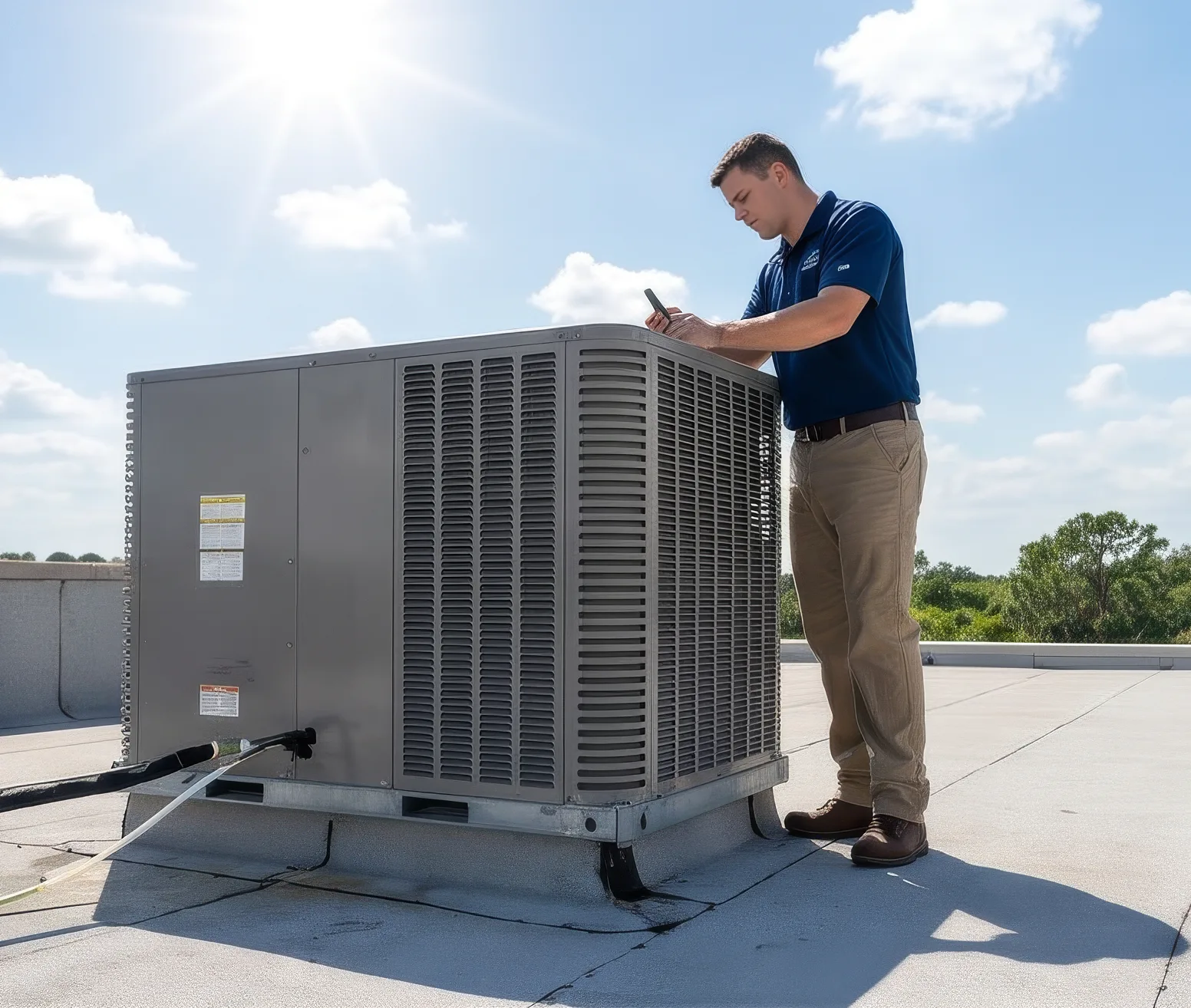
For Hillsborough County, pre-season HVAC prep starts with the local layout: a countywide mix of older central systems, newer suburban layouts, coastal humidity exposure, and long attic duct runs. Clear palm fronds, patio items, toys, grill covers, and loose debris away from the condenser before forecast pressure builds. Keep the air-handler area reachable, note the filter size and thermostat type, and take photos of model labels while the system is dry and normal. That gives Air Strike a clean before-storm record without asking anyone to open panels or touch wiring.
Hillsborough County outdoor unit and drain checks
Storm prep around central Tampa neighborhoods, Brandon suburbs, Riverview subdivisions, and north-county planned communities should include the outdoor pad, nearby fences, tree cover, downspouts, and condensate drain exit when it can be checked safely. Homes using I-275, I-75, Veterans Expressway, SR 60, US 301, and Dale Mabry Highway for service access may also need gate or parking notes before weather delays stack up. The goal is simple: keep windblown objects away from the condenser, keep water paths visible, and make sure the indoor equipment can be reached if a float switch, drain pan, or attic unit needs attention after heavy rain.
Power outage restart plan for Hillsborough County homes
After an outage in Hillsborough County, restart decisions should be calm and visual. If the unit is dry, panels look intact, the breaker has not repeatedly tripped, and no electrical smell is present, normal cooling may be possible. If water reached equipment, debris struck the cabinet, the thermostat behaves differently, the outdoor fan stays silent, or the system short cycles, leave cooling off and schedule diagnosis instead of forcing the system through a storm-related fault.
Post-storm warning signs in Hillsborough County
Hillsborough County warning signs include heat, humidity, water, ice, and electrical symptoms can escalate differently across older urban homes and newer two-story subdivisions. Also note if the home lost cooling immediately after power returned, if water appeared near the air handler, if the outdoor cabinet shifted on its pad, or if cooling works but the house stays sticky. Those details help separate wind damage, drain trouble, electrical interruption, airflow loss, and ordinary maintenance issues after a storm.
Hillsborough County quote and service details to send
Before requesting help after a storm, send the ZIP code, closest neighborhood reference, whether the home is near I-275, I-75, Veterans Expressway, SR 60, US 301, and Dale Mabry Highway, photos of visible damage, outage timing, indoor equipment location, and whether the wide mix of duct condition, humidity control, attic heat, access, and electrical readiness differences between communities were already concerns before the storm. For dispatch, share the city or ZIP code, nearest major road, number of systems, equipment location, and whether heat, water, ice, or electrical symptoms are creating urgency.
Local service next step
Get hurricane-season HVAC help for this home
Send Air Strike the ZIP code, equipment location, recent storm or humidity symptoms, thermostat behavior, drain history, and whether the home needs repair, maintenance, airflow review, or replacement planning. The service team can then route the request from this page instead of starting with a generic AC call.
- ZIP code, neighborhood, and gate or parking notes
- Indoor and outdoor equipment photos if available
- Water, ice, breaker, airflow, sticky-room, or no-cool symptoms
Homeowner questions
FAQ
How should Hillsborough County homeowners prepare HVAC for hurricane season?
Clear loose items near the condenser, trim obvious debris when safe, keep drains and the air-handler area accessible, document model labels, and follow local storm guidance. In Hillsborough County, include access notes such as I-275, I-75, Veterans Expressway, SR 60, US 301, and Dale Mabry Highway and any known drain, humidity, or airflow history before service demand spikes.
Should I run my AC after a storm in Hillsborough County?
Only if the equipment is dry, visibly intact, and not showing breaker trips, electrical smells, water, cabinet damage, or abnormal startup behavior. If the outdoor unit was flooded, hit by debris, or starts and stops quickly, leave it off and schedule diagnosis.
What HVAC details help after a Hillsborough County power outage?
Useful details include outage timing, whether the system was running when power failed, thermostat behavior after power returned, breaker or surge-device changes, water near the air handler, and photos of visible exterior damage or model labels.
When is hurricane-related AC trouble urgent in Hillsborough County?
Treat it as urgent when cooling is out during unsafe indoor heat, water threatens finished surfaces, electrical smells appear, breakers trip repeatedly, the outdoor fan will not run, or vulnerable occupants are affected. Dispatch timing still depends on safety, weather, technician availability, and service area.