
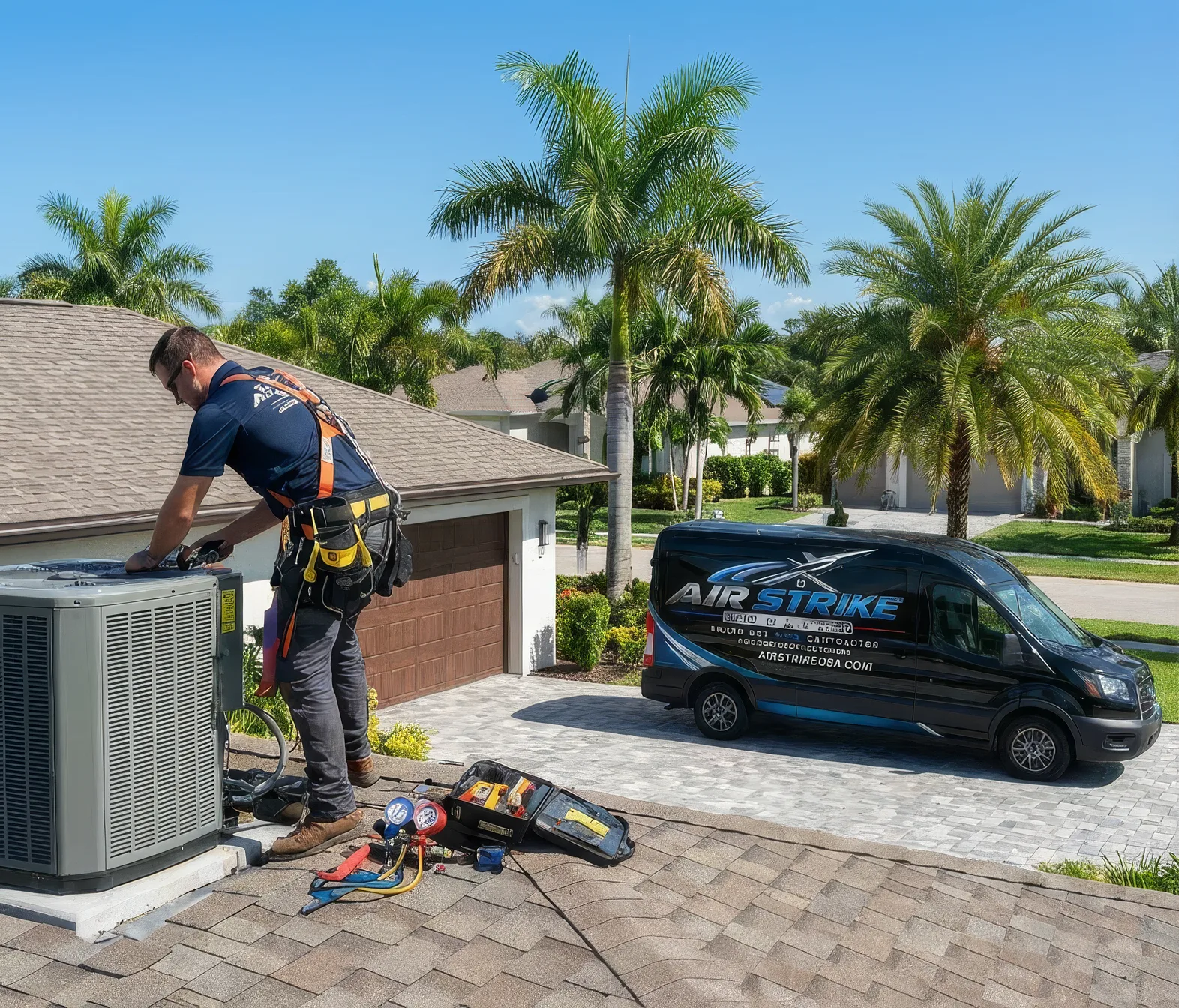
In humid Tampa weather, short cycles can leave the home cool but sticky.
Service notes
Key points before you call
Document cycle length.
Check filter and thermostat location.
Avoid forcing extreme setpoints.
Why short cycles feel worse in Tampa
Short cycling can cool the thermostat area before the AC has run long enough to move air through the whole home or pull moisture out of the air. In Tampa humidity, that can leave rooms sticky even when the display looks close to the setpoint. Repeated starts also add stress to controls, motors, capacitors, and compressor start components.
Details to document before service
Useful notes include how long each cycle lasts, whether the thermostat is near a vent or sunny wall, whether the filter is clean, whether the outdoor unit starts and stops with the indoor blower, whether water or ice is visible, and whether the problem happens at certain times of day. Those details help separate control, airflow, drain, electrical, and sizing clues.
Diagnosis path
A short-cycling visit should review thermostat behavior, placement, wiring, airflow, filter condition, drain safeties, electrical components, outdoor-unit operation, refrigerant-side readings, and equipment sizing indicators. The right repair depends on the cause. A thermostat setting issue, clogged filter, float-switch shutdown, weak capacitor, and oversized system can all create short-run symptoms.
When short cycling becomes urgent
Short cycling should move into an urgent repair request when breakers trip, electrical buzzing appears, the system struggles to start, the home stops cooling, water or ice is present, or the outdoor unit starts and stops harshly. In those cases, avoid forcing lower setpoints and share the cycle pattern, indoor temperature, ZIP code, and any water, ice, or electrical symptoms.
Emergency AC help
Short cycling AC repair in Tampa
Call when the AC starts and stops frequently, never settles into a steady cycle, or trips protection devices. If the home is heating up, water is active, ice is visible, breakers trip, or electrical symptoms appear, call or choose urgent repair service instead of forcing the system to keep running.
When to call a pro
Call when the AC starts and stops frequently, never settles into a steady cycle, or trips protection devices.
Homeowner questions
FAQ
Can an oversized AC short cycle?
Yes. An oversized AC can satisfy the thermostat too quickly, causing short runs and weak humidity removal. It is not the only cause, though. Before blaming size, a technician should check thermostat placement, airflow, filter restriction, drain safeties, electrical components, outdoor-unit operation, and refrigerant-side behavior.
Can a thermostat cause short cycling?
Yes. A thermostat can contribute to short cycling when it is near a supply vent, sunny wall, kitchen heat source, exterior door, or poorly insulated wall. Wiring, deadband settings, sensor accuracy, smart thermostat configuration, and low-voltage issues can also create control problems that look like equipment failure.
Should I keep running an AC that short cycles?
Avoid forcing the AC to keep running if short cycling comes with breaker trips, electrical sounds, ice, water, or poor cooling. If the home is still safe and no warning signs are present, note the cycle length and schedule diagnosis. Repeated starts can stress components and may make the underlying failure more expensive.
How long should a normal AC cycle run in Tampa?
There is no single normal cycle length for every Tampa home because load, humidity, thermostat settings, equipment size, and airflow all matter. The concern is a repeat pattern of very short starts and stops, especially with sticky rooms, no-cool symptoms, water, ice, or electrical warnings. A technician should compare cycle timing with airflow, controls, safeties, and sizing clues.
Can short cycling raise humidity and power bills?
Yes. Short cycling can satisfy the thermostat before the system runs long enough to remove moisture, leaving rooms sticky. It can also increase wear from repeated starts and may increase runtime if the home never settles into steady cooling. Diagnosis should check thermostat placement, filter restriction, airflow, drain safeties, electrical parts, and whether the equipment is oversized.